

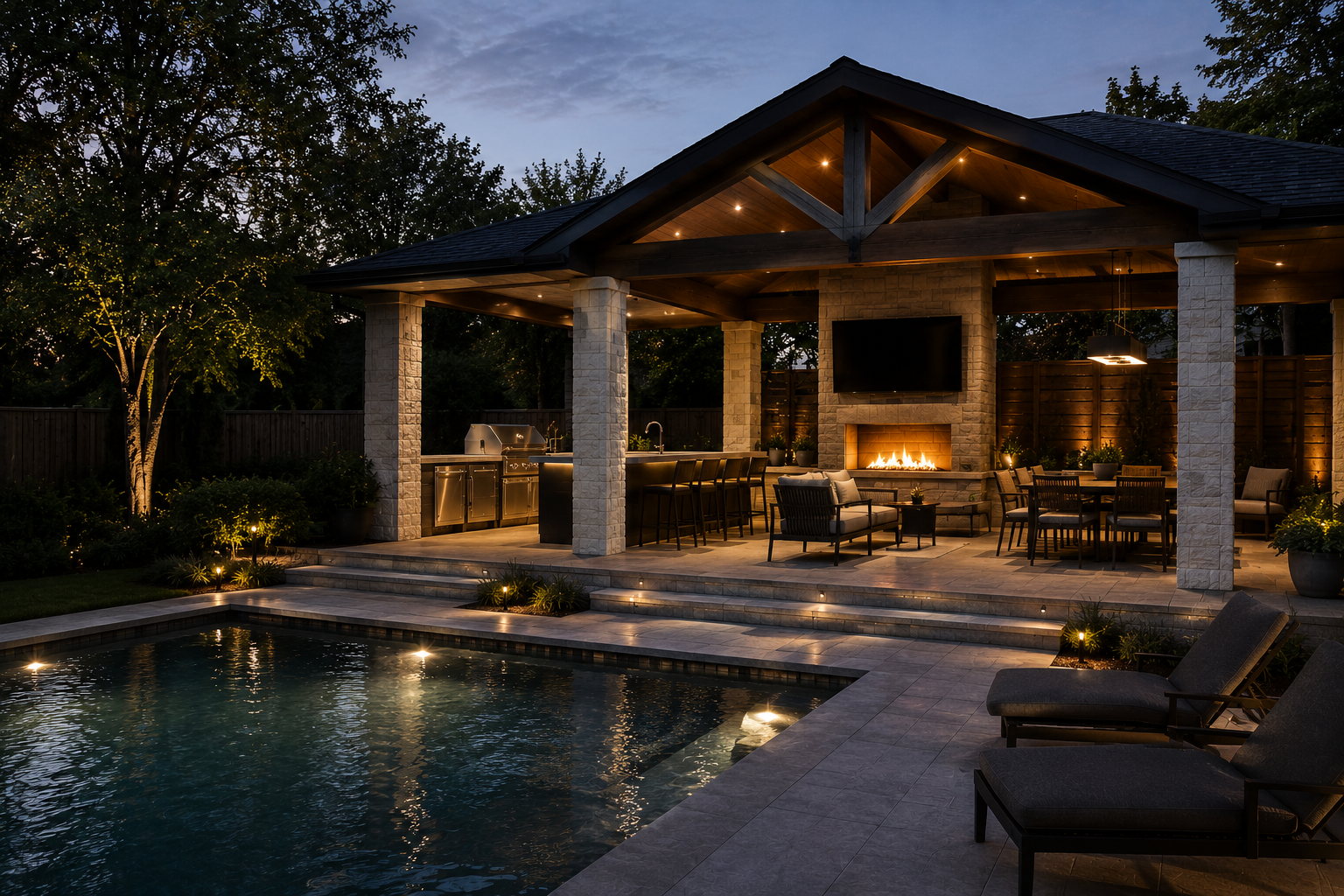
Introduction
High-end residential projects are defined not only by design, but by the level of coordination required to execute them properly.
While traditional project delivery methods separate design and construction into distinct phases, this structure can introduce fragmentation, delays, and misalignment between intent and outcome.
At Mediterra, we operate through a design-build model, not as a convenience, but as a deliberate approach to maintaining clarity, accountability, and continuity throughout the project.
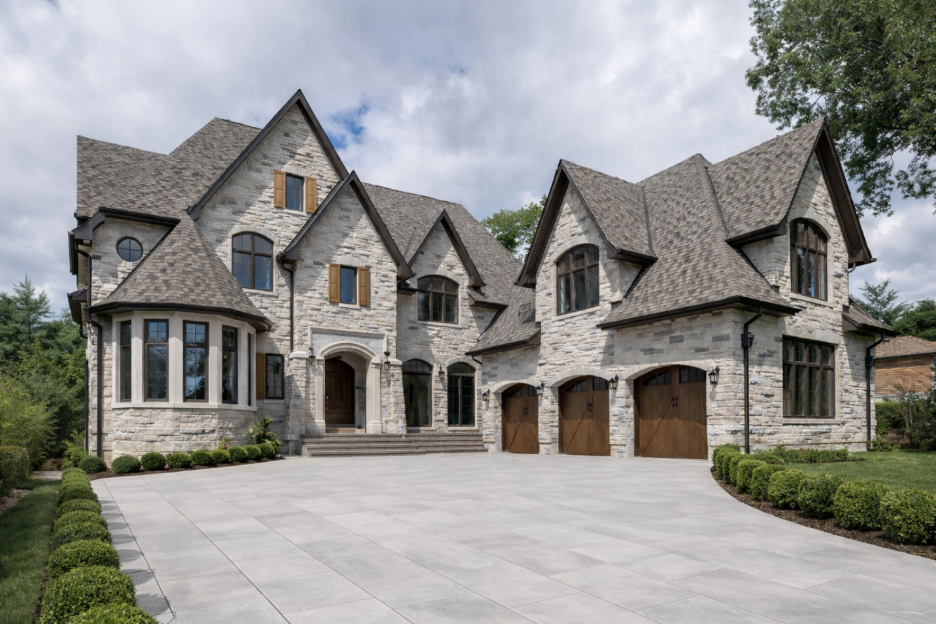
High-end residential projects require coordination across structure, exterior environments, and interior spaces from the earliest stages of planning.
Understanding the Traditional Model
In a conventional approach, the framework is divided:
- Architects and designers develop the project
- Contractors are brought in later to execute
- Coordination occurs across separate teams
While this structure can work, it often relies heavily on interpretation. Details developed in drawings must be translated into construction under real-world conditions, where unforeseen challenges can arise.
Without continuous alignment between design and execution, compromises can occur impacting both the quality and integrity of the final result.
Role Definition and Accountability
In traditional delivery models, responsibility is distributed across multiple parties.
Architects develop the design, consultants contribute technical input, and contractors are responsible for execution. While each role is clearly defined, accountability across the project can become fragmented.
When challenges arise during construction, decisions often require coordination between multiple teams, which can slow progress and introduce uncertainty.
A design-build structure consolidates responsibility within a unified framework, allowing decisions to be made with greater clarity and continuity throughout the project.
Where Fragmentation Becomes a Risk
High-end residential work involves more than construction. It requires precision across multiple disciplines.
Structural elements, exterior environments, interior finishes, and technical systems must align seamlessly.
In a fragmented delivery model, these elements are often coordinated reactively rather than proactively. This can lead to:
- Delays in decision-making
- Inconsistencies in detailing
- Increased revisions during construction
- Loss of design clarity
The result is not necessarily failure, but a gradual erosion of the original vision.
The Design-Build Advantage
The design-build model integrates planning, coordination, and execution within a single framework.
Rather than separating responsibilities, the process is aligned from the outset, allowing decisions to be evaluated in relation to both design intent and construction realities.
At Mediterra, this means:
- Early alignment between concept, budget, and feasibility
- Continuous coordination across disciplines
- Clear accountability throughout the project
- Reduced reliance on interpretation during construction
This structure allows for greater precision, efficiency, and consistency from start to finish.
Decision-Making Efficiency
In a design-build structure, decision-making is not separated across phases or teams.
Design, budget, and construction considerations are evaluated together, allowing decisions to be made with a full understanding of their impact on the project.
This reduces delays, limits rework, and allows the project to progress with greater clarity and momentum.
Rather than revisiting decisions during construction, the method is structured to resolve them at the appropriate stage, supporting both efficiency and design integrity.
Maintaining Clarity Through Execution
One of the primary advantages of design-build is continuity.
The same team involved in early planning remains engaged through construction, ensuring that decisions made at the design stage are carried through to execution.
This minimizes the disconnect that can occur when projects transition between teams, and allows for a more disciplined approach to sequencing, detailing, and problem-solving.
The result is an approach that is not only more efficient, but more aligned with the original intent of the project.
This continuity allows for more disciplined decision-making, particularly in areas where design intent and construction realities intersect.
A More Integrated Approach to Residential Environments
High-end residential projects today extend beyond the structure of the home.
Outdoor living environments, landscape integration, and interior architecture must all work together to create a cohesive experience.
A design-build model allows these elements to be developed in parallel, rather than in isolation. This ensures that:
- Outdoor spaces align with architectural structure
- Interior and exterior materials transition seamlessly
- Technical systems are coordinated early
- The property functions as an integrated environment
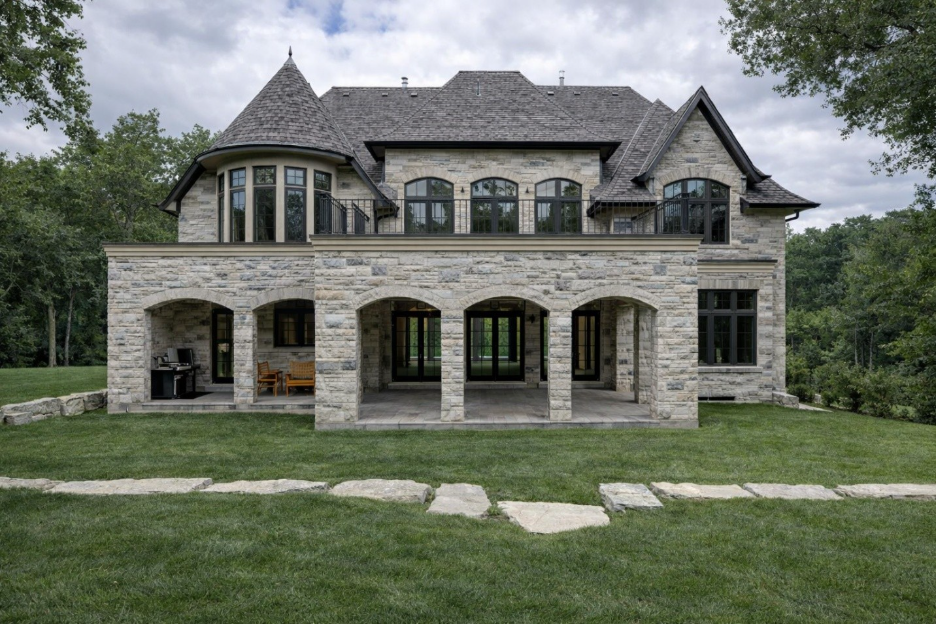
A unified delivery model allows architecture, landscape, and interior elements to be developed as a cohesive environment rather than independent components.
Continuity from Concept to Completion
One of the defining advantages of a design-build approach is continuity.
The same team responsible for early planning remains engaged throughout the project lifecycle, allowing decisions to be evaluated in relation to both design intent and construction conditions.
This reduces the need for reinterpretation, maintains alignment across phases, and supports a more cohesive outcome from concept through completion.
This continuity extends beyond construction, supporting a consistent approach from early planning through final execution.
When Design-Build Is Most Effective
Not every project requires a design-build approach.
However, it becomes increasingly valuable when:
- Projects involve multiple integrated components
- Architectural clarity and material continuity are priorities
- Outdoor and interior environments are developed together
- The scale and complexity require coordinated oversight
In these conditions, a consolidated delivery model provides greater control and consistency.
“Our design-build process is structured to maintain continuity from concept through execution.”
Conclusion
The difference between traditional construction and design-build is not simply structural. It is strategic.
By aligning design intent with technical coordination and construction execution from the outset, design-build allows for a more cohesive, efficient, and refined outcome.
For high-end residential projects where precision, continuity, and long-term value matter, this approach provides a clear advantage.