

Introduction
Water has a unique ability to transform the way a property is experienced. Beyond its beauty, it introduces movement, reflection, and a sense of calm that few other landscape elements can achieve.
Yet the most memorable residential pools are not defined by their size or shape alone they are defined by how naturally they belong within the architecture of the home and the landscape that surrounds them.
Too often, pools are approached as standalone amenities, positioned wherever space allows after the rest of the backyard has been planned. The result may function well for swimming, but it rarely contributes to a cohesive outdoor environment.
The most successful projects begin with a different perspective.
Rather than treating the pool as an isolated feature, it becomes an architectural element that helps organize the entire composition of the property.
Its placement influences circulation, frames important views, strengthens the relationship between indoor and outdoor spaces, and establishes the visual rhythm of the landscape itself.
Across Toronto and the Greater Toronto Area, discerning homeowners are increasingly seeking outdoor environments that feel intentional rather than assembled over time.
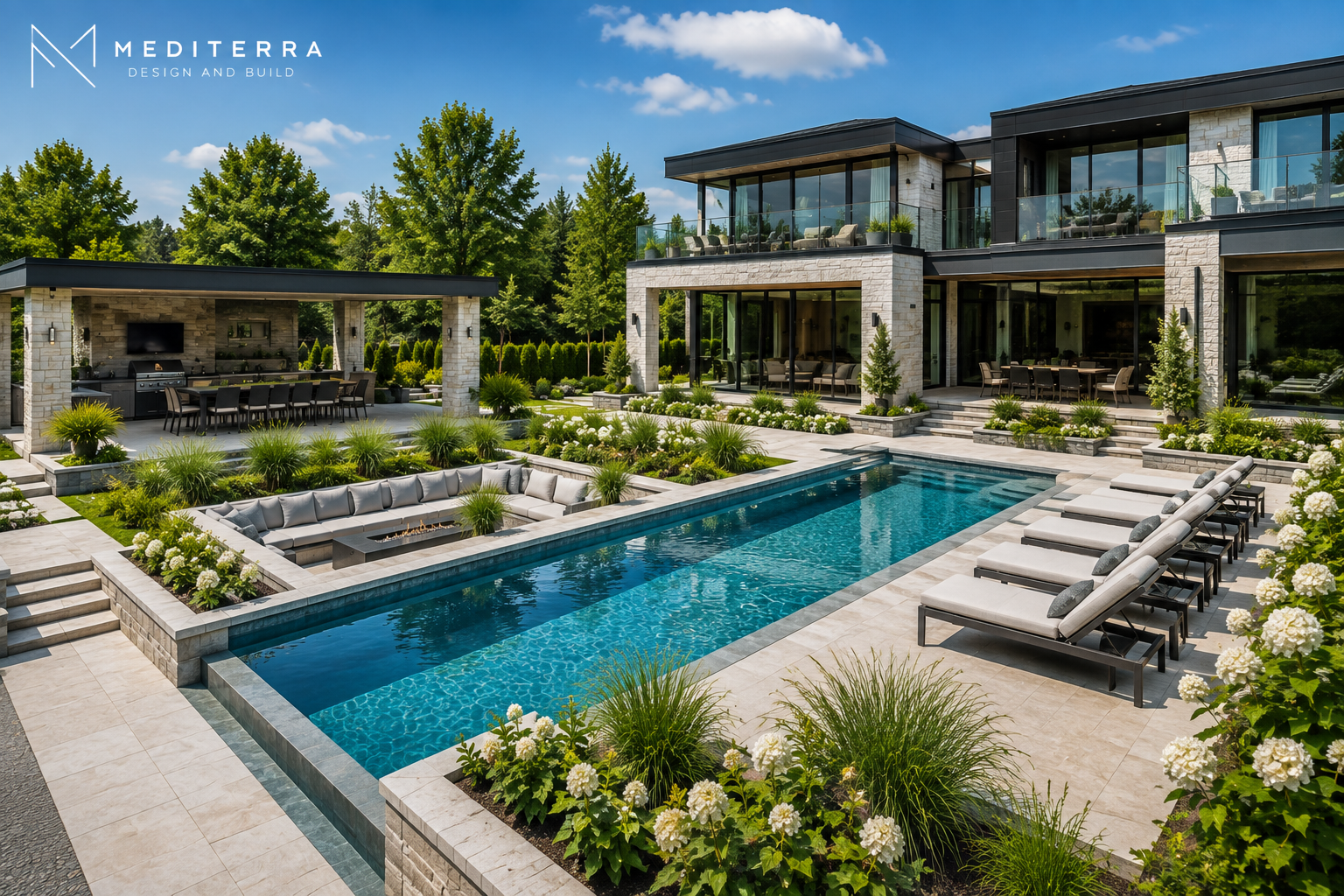
A thoughtfully integrated pool can become the centrepiece of that experience, bringing together architecture, terraces, gardens, outdoor living spaces, and carefully selected materials into one unified composition.
At Mediterra Design & Build, every pool is considered within the context of the complete residential environment, where architecture, landscape, and outdoor living are designed together rather than as separate projects.
A Pool Should Organize the Landscape, Not Simply Occupy It
One of the defining characteristics of exceptional residential design is that every element feels as though it belongs exactly where it is. This principle applies as much to the placement of a pool as it does to the architecture of the home itself.
When positioned with intention, a pool becomes the organising framework for the surrounding landscape. Its geometry establishes visual order, influences circulation, and creates a hierarchy that guides how people move through and experience the outdoor environment.
Rather than asking, "Where will the pool fit?", the better question is:
"How should the entire property be organised around water?"
That subtle shift in thinking changes every design decision that follows.
The alignment of the pool with the home's primary architectural axes, the relationship between terraces and interior sightlines, and the transition between gathering spaces all contribute to a landscape that feels balanced, intuitive, and timeless.
When these relationships are carefully considered from the beginning, the result is not simply a beautiful pool. It is a cohesive residential environment where every component strengthens the whole.
Geometry Creates Calm
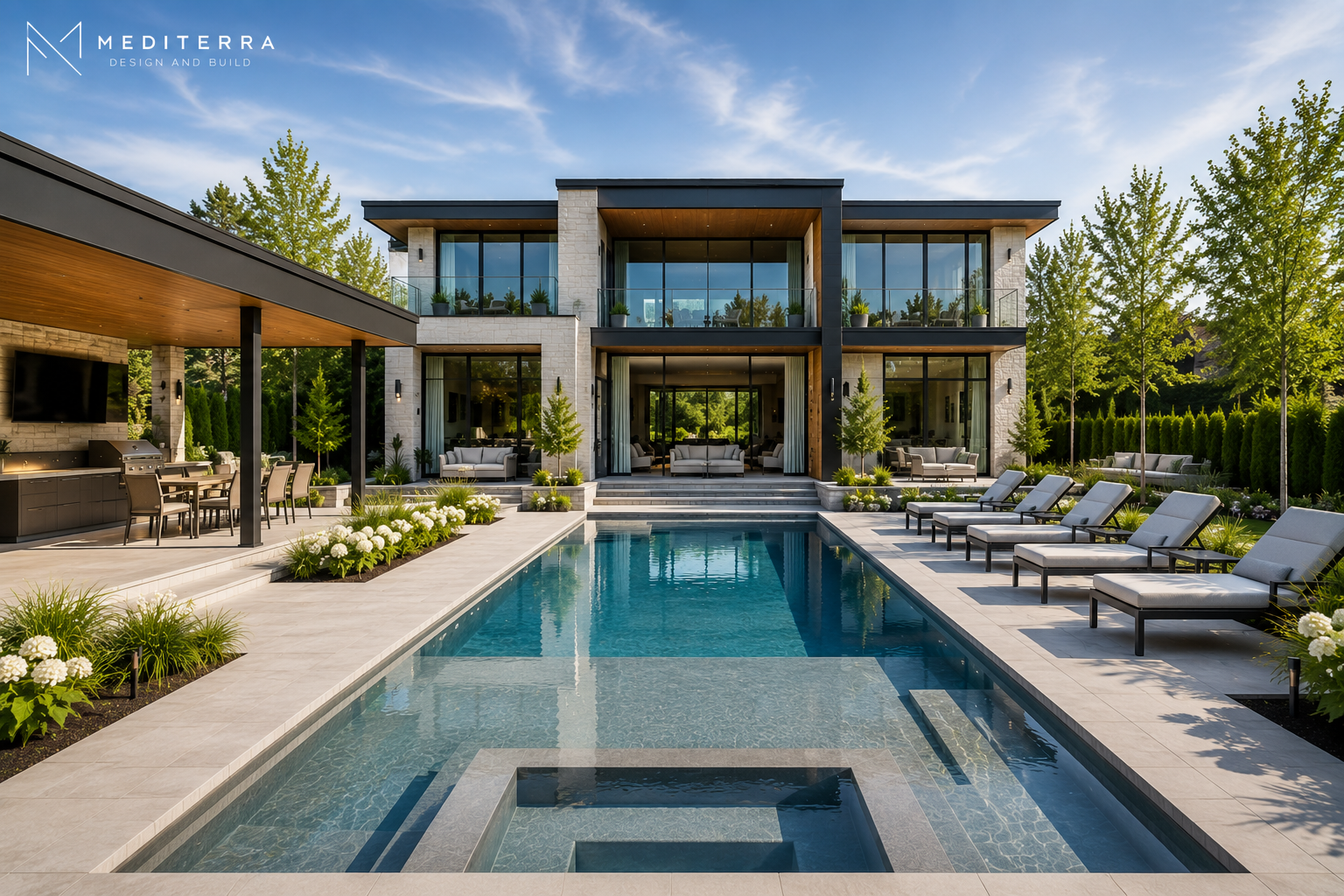
The geometry of a pool influences far more than aesthetics. It establishes proportion, reinforces architectural language, and determines how the surrounding landscape is perceived.
Contemporary homes often benefit from restrained geometric forms that echo the clean lines of the residence. Rectilinear pools naturally extend terraces, reinforce structural rhythm, and create long visual axes that make outdoor spaces feel larger and more composed.
Conversely, properties with mature gardens or more organic architectural forms may call for softer geometries that respond to existing site conditions while maintaining visual harmony.
Neither approach is inherently better.
What matters is that the geometry feels intentional.
A pool should never compete with the architecture. Instead, it should quietly reinforce it, allowing the home, landscape, and outdoor living spaces to read as one integrated composition rather than a collection of unrelated features.
The surrounding terraces, planting, seating areas, and outdoor rooms should all respond to this geometry, creating a sense of order that visitors may not consciously notice but instinctively appreciate.
Material Continuity Shapes the Experience
The materials surrounding a pool influence far more than durability or maintenance. They define how the water connects to the architecture of the home and determine whether the entire environment feels unified or fragmented.
The strongest outdoor environments rely on a restrained material palette that flows naturally from interior spaces to exterior terraces. Rather than introducing numerous competing finishes, carefully selected materials establish continuity while allowing the architecture and landscape to remain the primary focus.
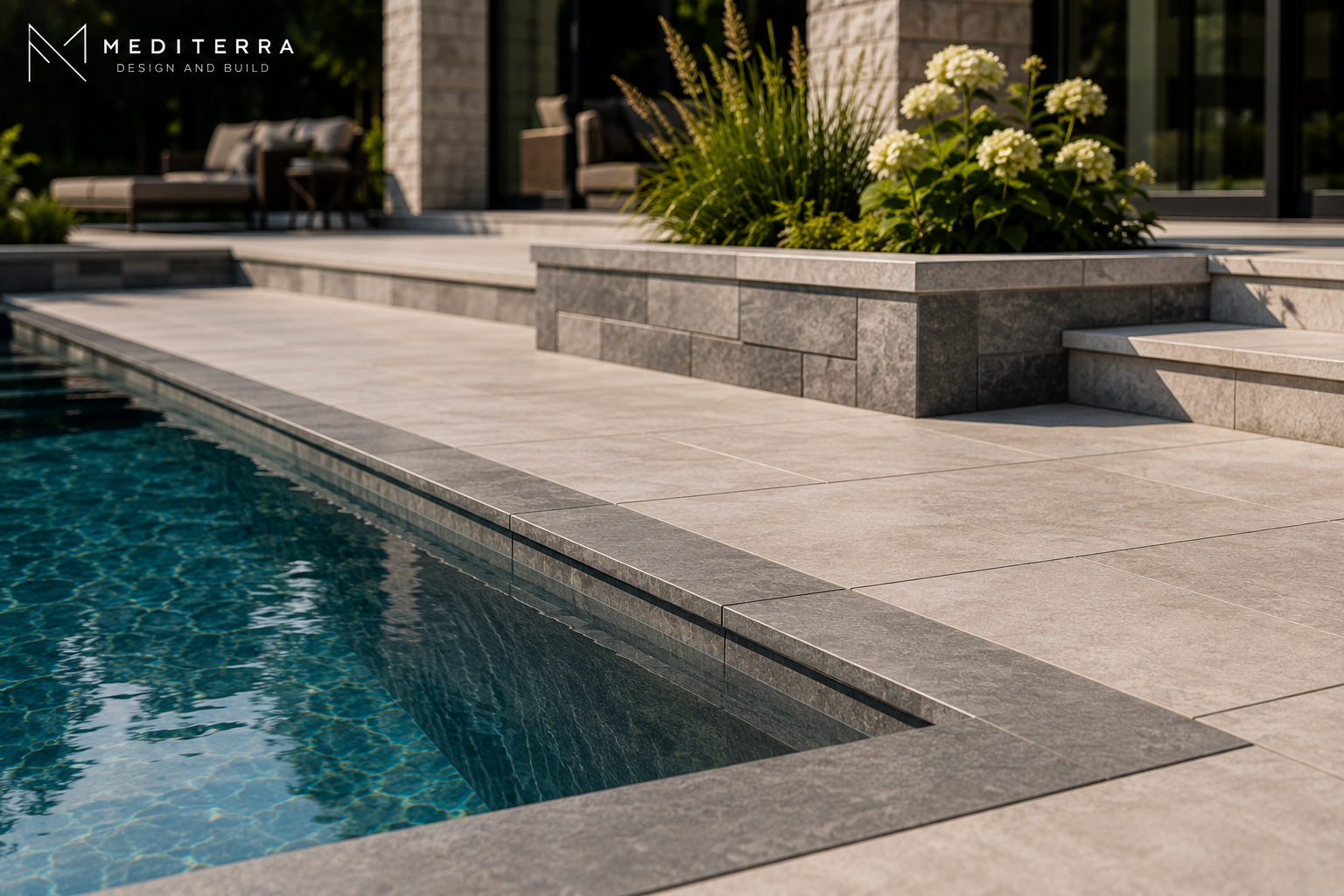
Natural stone, porcelain surfaces, architectural concrete, and thoughtfully detailed coping each contribute to the character of the space. Beyond aesthetics, they must also perform exceptionally well in Southern Ontario's climate, where freeze-thaw cycles, moisture, and seasonal temperature fluctuations place significant demands on exterior materials.
Material selection should therefore balance beauty with long-term performance. Slip resistance, durability, ease of maintenance, and compatibility with adjacent planting and architectural elements all contribute to creating an environment that will continue to perform beautifully for years to come.
Ultimately, the most successful pool terraces never feel like separate patios added around a swimming pool. They read as natural extensions of the home's architecture, allowing movement between interior and exterior spaces to feel seamless.
Outdoor Rooms Create Meaning Beyond the Water
A beautifully designed pool is rarely experienced in isolation.
People naturally move between multiple outdoor spaces throughout the day. Morning coffee may be enjoyed beneath a covered pavilion, afternoons spent beside the pool, while evenings shift toward an outdoor kitchen or fire feature. The success of the landscape depends on how comfortably these experiences connect.
Rather than designing each destination independently, the most successful properties establish a sequence of outdoor rooms that support different activities while remaining visually connected.
A pool may anchor the composition, but surrounding spaces give it purpose.
Covered structures provide welcome shade during the summer months while extending seasonal enjoyment well into spring and autumn. Outdoor kitchens encourage gathering and shared meals. Comfortable seating areas invite conversation, while thoughtfully placed planting softens transitions and frames important views without competing for attention.
When these spaces are conceived together from the beginning, the result is an environment that feels calm, balanced, and intuitive. One where every element contributes to the experience of the whole.
"Discover how thoughtfully designed outdoor kitchens become natural gathering spaces in our Designing the Ultimate Outdoor Kitchen Insight article."
"Explore how covered structures extend seasonal living in our Pavilion Design for Four-Season Outdoor Living Insight article."
Light Reveals a Different Landscape
The experience of a pool changes dramatically after sunset.
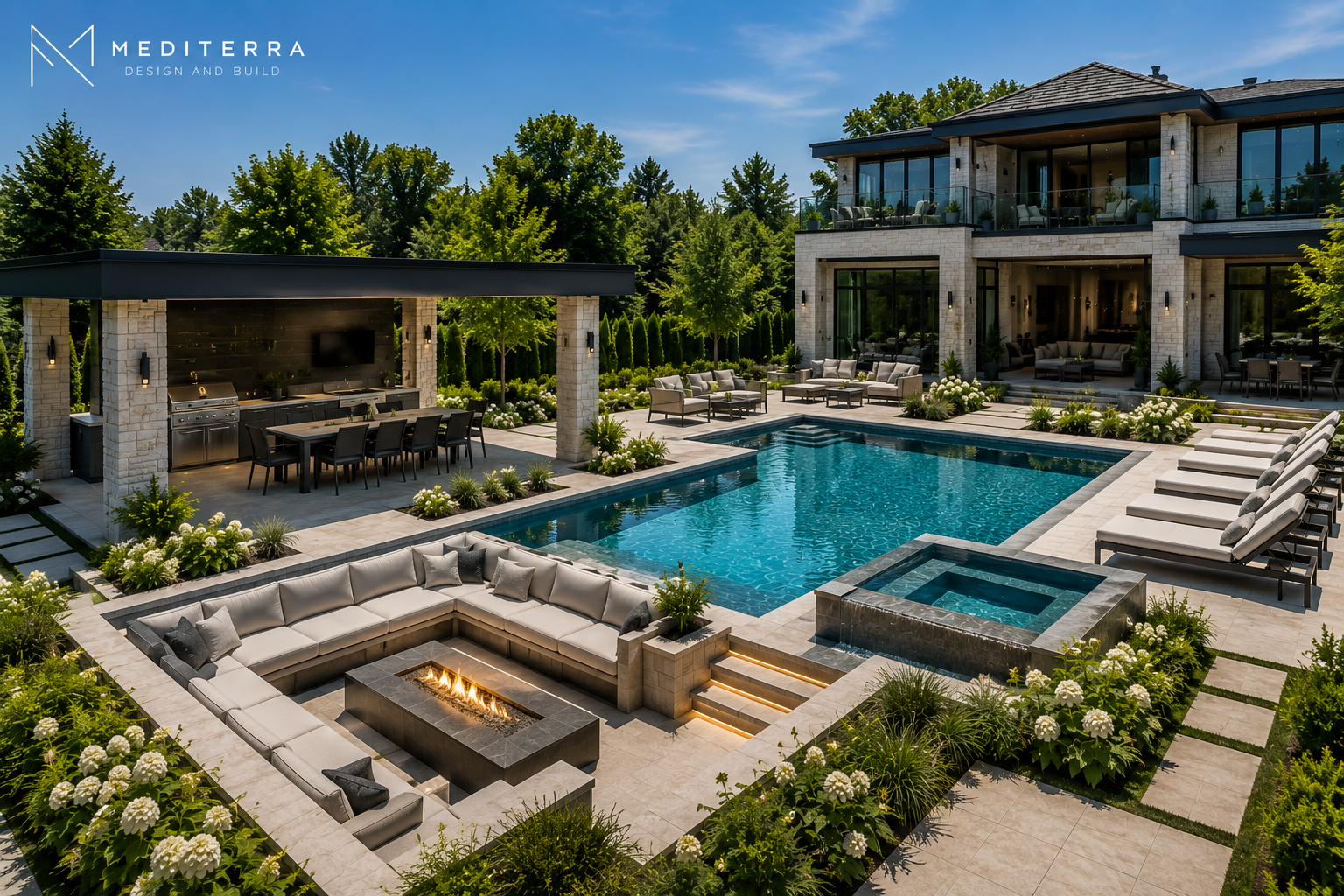
During daylight hours, water reflects the surrounding architecture and landscape. At night, it becomes a canvas for light, revealing entirely different qualities within the outdoor environment.
Thoughtfully layered lighting does far more than illuminate pathways or improve safety. It introduces depth, highlights architectural features, reflects gently across the water's surface, and creates atmosphere that encourages people to remain outdoors long after the sun has disappeared.
Rather than relying on excessive brightness, successful lighting strategies favour restraint. Underwater illumination, carefully positioned architectural fixtures, subtle planting accents, and discreet pathway lighting work together to establish balance without overwhelming the landscape.
The objective is not simply to brighten the property.
It is to reveal it.
A thoughtfully illuminated pool becomes the quiet centre of the evening landscape, reinforcing architectural forms while creating warmth, comfort, and visual depth throughout the entire outdoor environment.
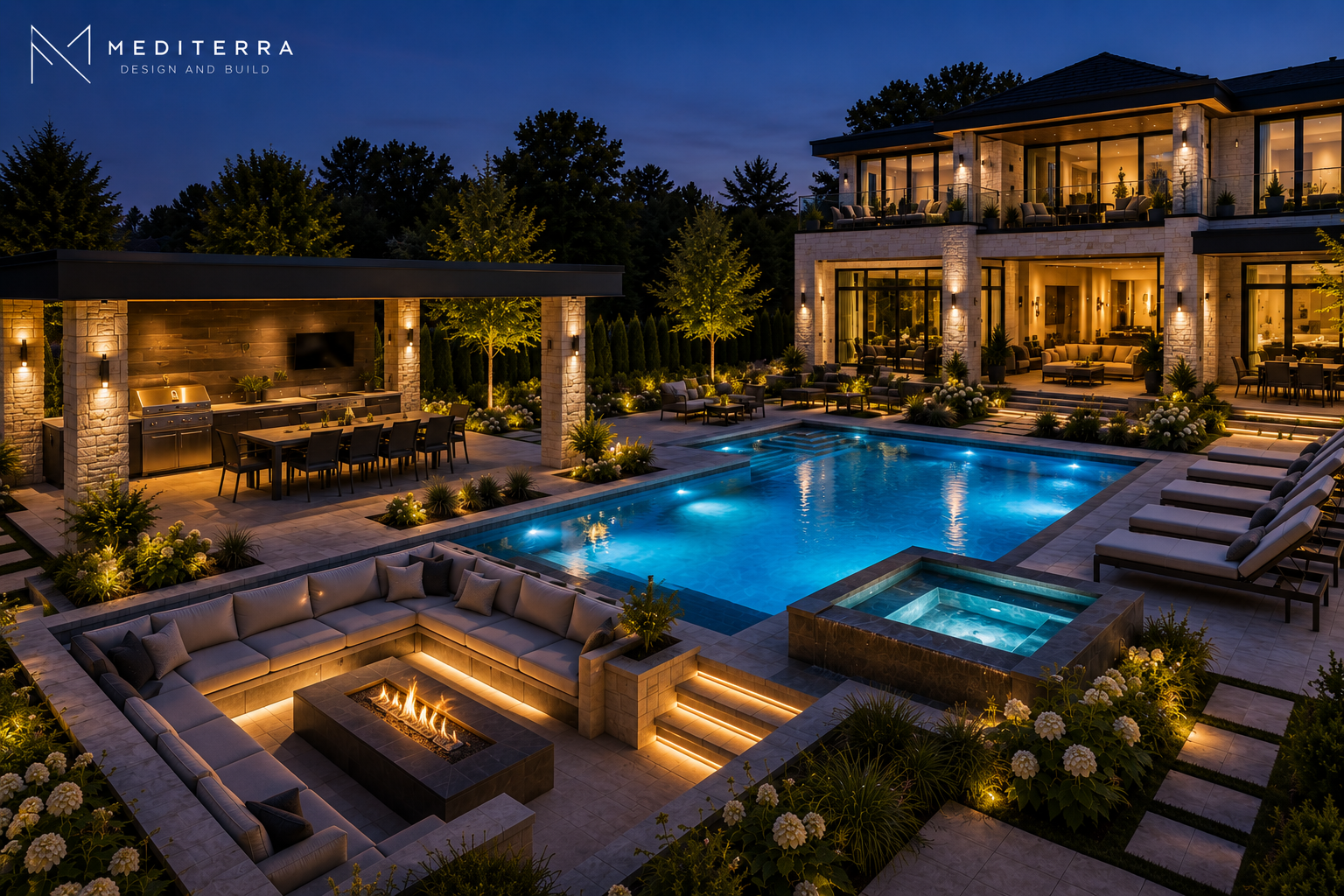
Water as Part of a Complete Residential Vision
Perhaps the greatest misconception surrounding residential pools is that they represent the end of a project.
In reality, they are often the beginning.
When viewed through an architectural lens, water becomes one component within a broader composition. One that includes architecture, landscape, circulation, materials, lighting, planting, and spaces for gathering. None of these elements should compete for attention. Instead, each should quietly reinforce the others, allowing the property to feel cohesive from every viewpoint.
This integrated approach creates environments that are not only visually striking but also more enjoyable to live in. Spaces feel connected rather than fragmented. Movement becomes intuitive. Outdoor rooms support everyday routines as naturally as they accommodate larger celebrations.
The result is a property that continues to reveal new experiences over time while remaining rooted in thoughtful design principles.
"Explore how our Architectural Outdoor Living approach brings every exterior element together through one integrated design-build process."
Conclusion
Exceptional pool design begins long before excavation and extends well beyond the water itself.
When considered as an architectural element rather than a standalone feature, a pool has the ability to organize space, strengthen relationships between architecture and landscape, and shape the experience of an entire property.
Its geometry influences movement. Its materials establish continuity. Its reflections enrich the surrounding architecture. Together with carefully planned outdoor rooms, planting, and lighting, it becomes part of a complete residential environment that feels intentional from every perspective.
Across Toronto and the Greater Toronto Area, homeowners are increasingly seeking outdoor spaces that offer more than individual features. They are looking for environments that feel unified, enduring, and thoughtfully composed.
At Mediterra Design & Build, pools are never designed in isolation. They are conceived as part of an integrated residential vision where architecture, landscape, and outdoor living come together to create places that are as timeless as they are enjoyable.