

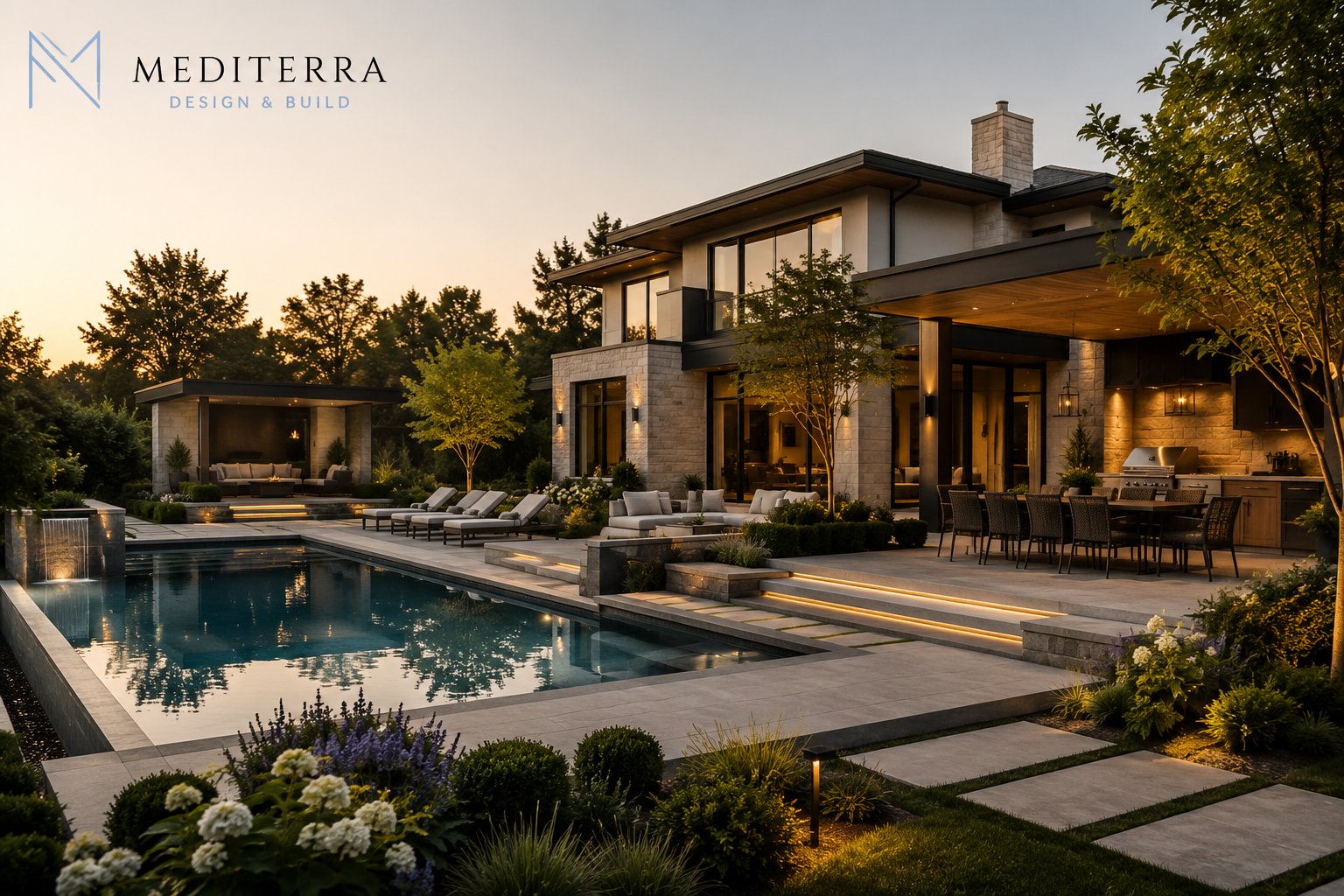
Introduction
The most memorable homes are often impossible to separate from their landscapes.
Remove the architecture, and the landscape feels incomplete.
Remove the landscape, and much of the architecture loses its character.
The two are conceived together, allowing each to strengthen the other.
This relationship has long guided exceptional residential design. Rather than treating gardens, patios, and outdoor living spaces as additions surrounding a completed home, the landscape becomes an extension of the architecture itself. Materials continue beyond the walls of the residence. Views are carefully framed. Outdoor rooms emerge naturally from interior spaces. Planting softens structure while reinforcing the overall composition.
When these relationships are overlooked, even beautifully constructed homes can feel disconnected from their surroundings. Outdoor spaces may function independently, yet they rarely achieve the sense of harmony that distinguishes truly exceptional residential environments.
Across Toronto and the Greater Toronto Area, homeowners are increasingly seeking properties where architecture and landscape work together as one cohesive experience. The goal is no longer simply to improve a backyard, but to create a home that feels complete from every perspective.
At Mediterra Design & Build, landscape design begins with the architecture of the residence. Every terrace, planting bed, pathway, and outdoor room is considered part of a larger residential composition; one that supports both everyday living and the long-term character of the home.
The Home Does Not End at the Exterior Wall
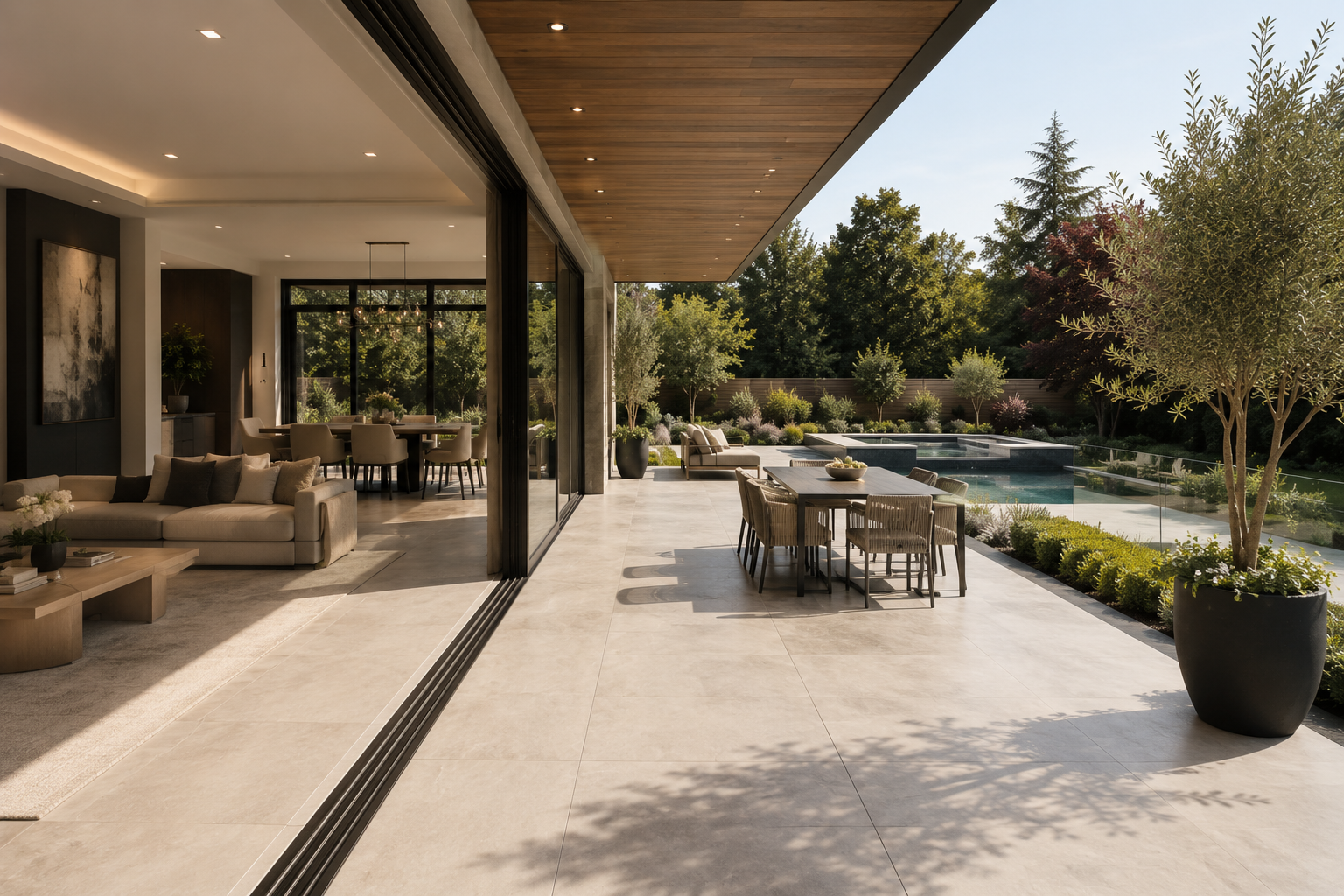
One of the defining characteristics of thoughtful residential design is the seamless transition between interior and exterior spaces.
The experience of a home should not stop at the back door.
Instead, the architectural language gradually extends beyond the building through carefully aligned terraces, material continuity, outdoor rooms, and surrounding gardens. Interior living spaces find natural extensions outdoors, allowing everyday activities to continue without interruption.
A dining room opens naturally toward an outdoor dining terrace.
A family room transitions into a comfortable lounge beneath a pavilion.
Large expanses of glazing strengthen visual connections while reducing the perceived boundary between inside and outside.
When these transitions are carefully considered, the outdoor environment begins to feel less like a backyard and more like another series of rooms belonging to the home itself.
Architecture no longer ends at the walls.
It dissolves gently into the landscape.
"Discover how thoughtfully designed outdoor gathering spaces strengthen these transitions in our Designing the Ultimate Outdoor Kitchen Insight article"
The Landscape Should Belong to the Home
Every residence possesses its own architectural character.
The surrounding landscape should reinforce that identity rather than compete with it.
A contemporary home defined by clean geometry, restrained detailing, and strong horizontal lines naturally calls for a different landscape language than a traditional stone residence or a heritage property surrounded by mature gardens.
Successful landscape design begins by listening to the architecture.
Proportion.
Scale.
Materiality.
Rhythm.
These characteristics establish a visual vocabulary that should continue throughout the property.
Planting, paving, walls, terraces, and outdoor structures all become part of the same architectural conversation.
Rather than introducing unrelated design styles, the landscape quietly strengthens what the architecture has already established.
This sense of continuity often distinguishes timeless residential environments from those influenced primarily by short-lived trends.
Landscape Shapes How Architecture Is Experienced
Architecture is rarely experienced in isolation.
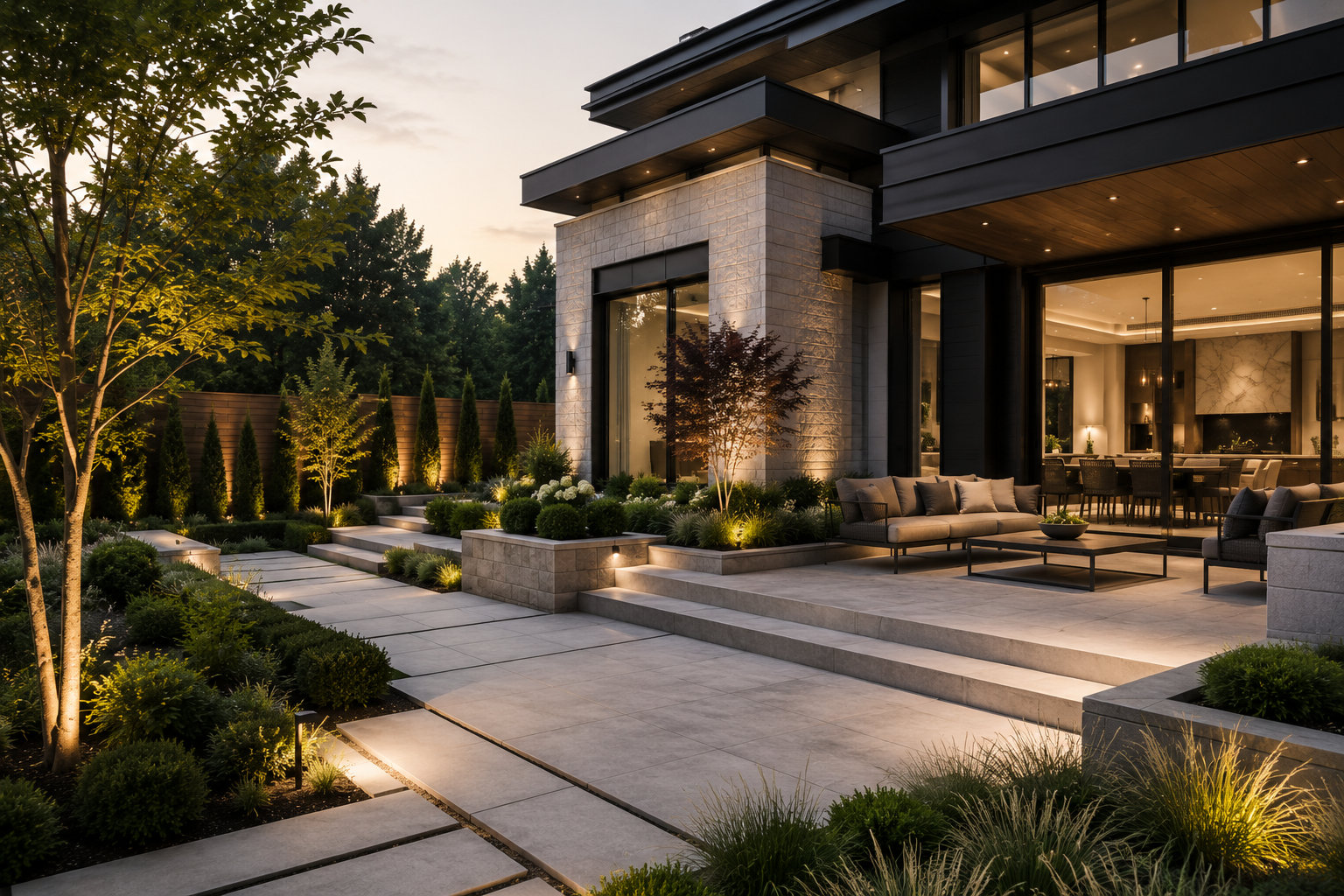
The journey toward a home, the views from within it, and the sequence of outdoor spaces surrounding it all influence how the architecture is perceived.
A carefully positioned tree may frame an important view.
Layered planting softens large architectural forms while introducing movement and seasonal change.
A pathway gently guides visitors toward the entrance while creating moments of anticipation along the way.
Terraces establish outdoor gathering spaces without interrupting broader sightlines across the property.
In many respects, landscape functions as the setting through which architecture is understood.
It influences scale.
Directs movement.
Frames perspective.
Creates privacy.
Introduces discovery.
The result is a residential environment where the experience of arriving, moving through, and living within the property feels intentional from beginning to end.
Materials Create Continuity
Architecture speaks through proportion, form, and detail.
Materials give that language continuity.
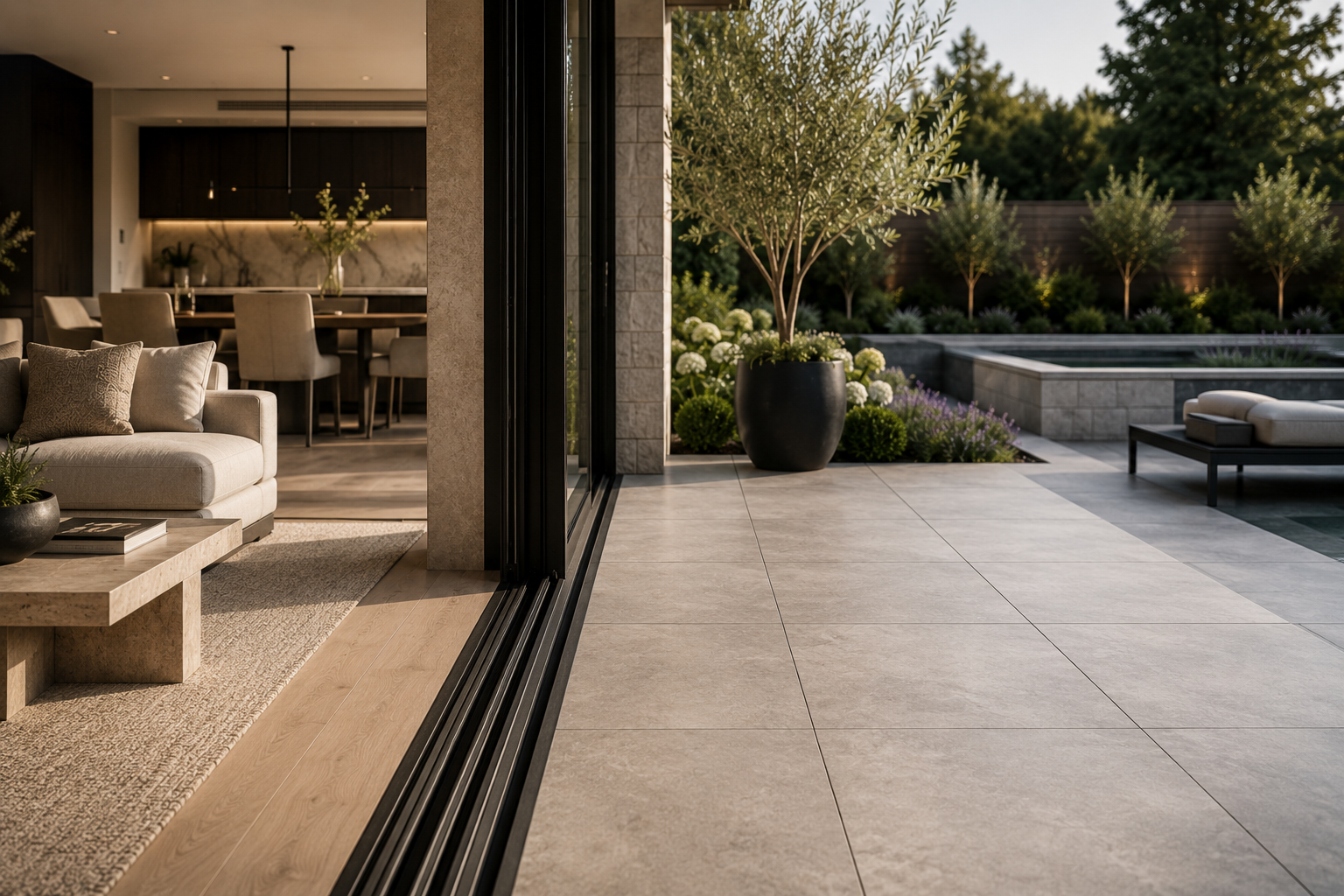
When thoughtfully selected, they allow interior and exterior spaces to feel connected rather than separate. Flooring tones may extend naturally onto a terrace. Limestone used within the architecture may reappear as pool coping or garden walls. Structural steel, natural timber, and carefully detailed concrete can establish subtle visual relationships that strengthen the entire property without feeling repetitive.
These decisions are rarely noticed individually.
Instead, they create a quiet sense of cohesion that homeowners instinctively experience as balance.
The objective is never to repeat materials simply for consistency.
It is to establish a common architectural language that allows every element of the property to belong to the same composition.
This philosophy becomes particularly important in larger residential projects where outdoor kitchens, pools, pavilions, terraces, and landscape features must feel like natural extensions of the residence rather than separate additions completed over time.
Internal Link
"Explore how thoughtful material selection strengthens architectural continuity in our Materials That Define Luxury Outdoor Living Insight article."
Outdoor Rooms Bring Architecture Into the Landscape
People naturally understand rooms.
They provide comfort, purpose, and a sense of belonging.
The same principle applies outdoors.
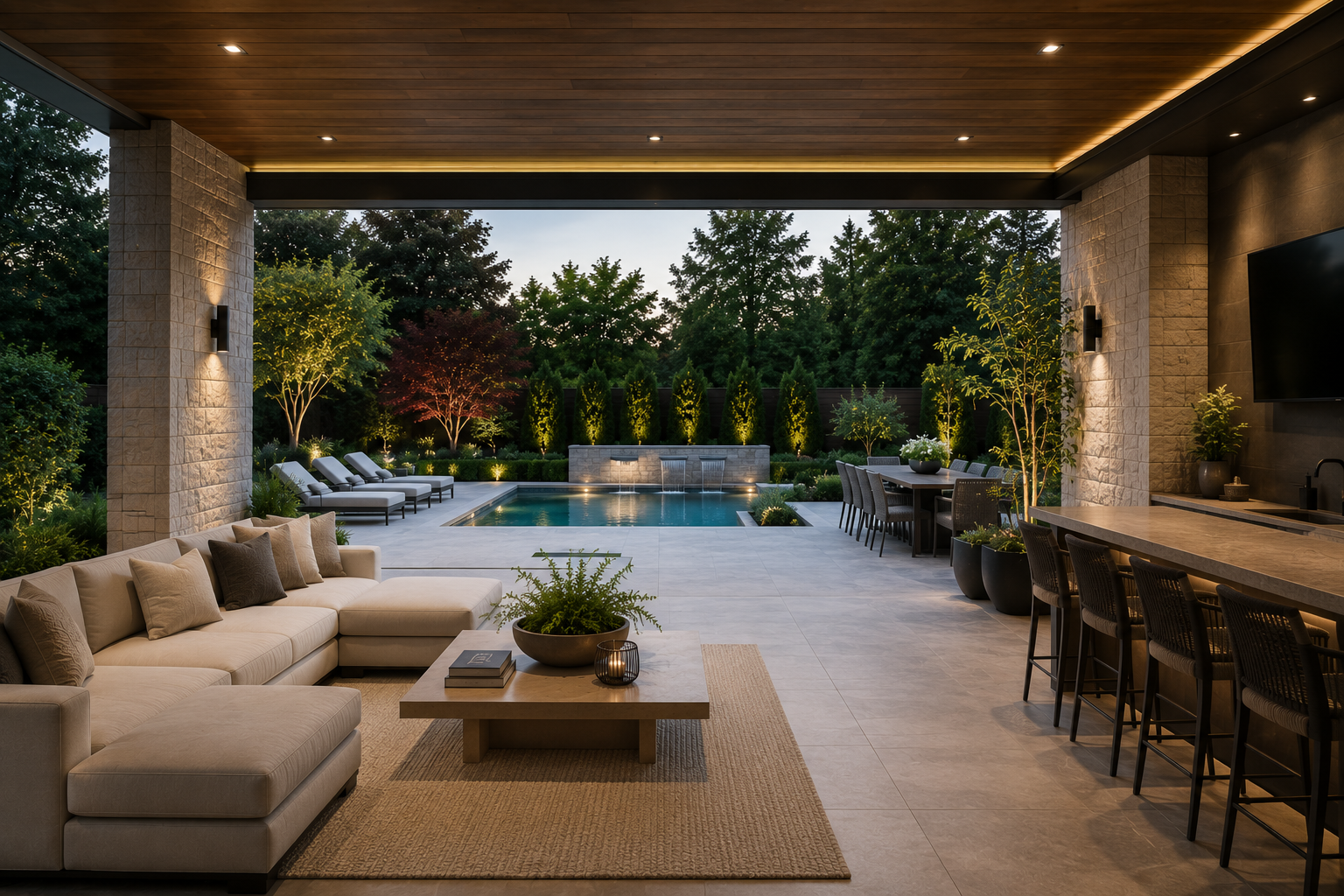
Rather than treating the landscape as one large open space, exceptional residential environments establish a series of outdoor rooms, each carefully shaped around the way people live.
A dining terrace extends family meals outdoors.
A covered pavilion becomes an outdoor living room.
Poolside seating encourages quiet relaxation.
A secluded garden retreat offers a place for reflection away from the activity of the home.
Although each space serves a different function, they remain visually connected through shared materials, carefully framed views, and thoughtful circulation.
The landscape begins to feel like a natural continuation of the home's floor plan.
Not because walls define each room...
...but because architecture quietly organizes the experience.
"Learn how thoughtfully designed covered structures extend residential architecture in our Pavilion Design for Four-Season Outdoor Living Insight article."
Planting Is Architecture's Quiet Partner
Landscape is often viewed simply as decoration.
In reality, planting performs many of the same roles as architecture itself.
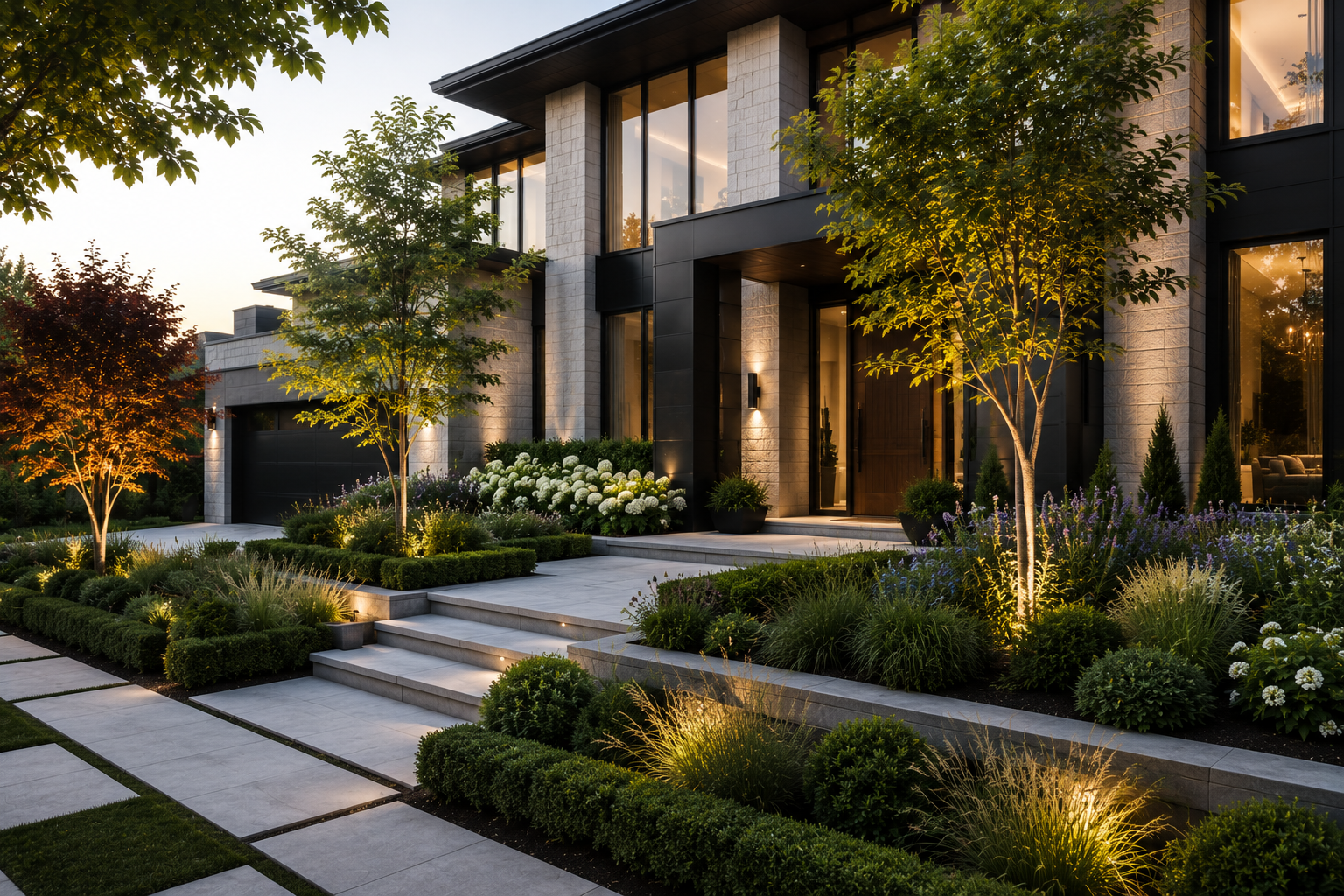
Trees establish ceilings.
Hedges define walls.
Garden paths become hallways.
Open lawns create outdoor courtyards.
Layered planting introduces depth while guiding movement throughout the property.
These living elements soften built form without diminishing its presence. Mature trees frame architecture from a distance while creating welcome shade. Ornamental grasses introduce movement that contrasts beautifully with the permanence of stone and concrete. Seasonal variation continually reshapes the landscape, allowing the property to evolve without losing its architectural identity.
Unlike buildings, landscapes are never static.
They mature.
They change.
They become richer with time.
This ongoing relationship between architecture and planting is one of the defining characteristics of exceptional residential environments.
Light Completes the Composition
As daylight fades, another layer of design quietly begins to shape the experience of the property.
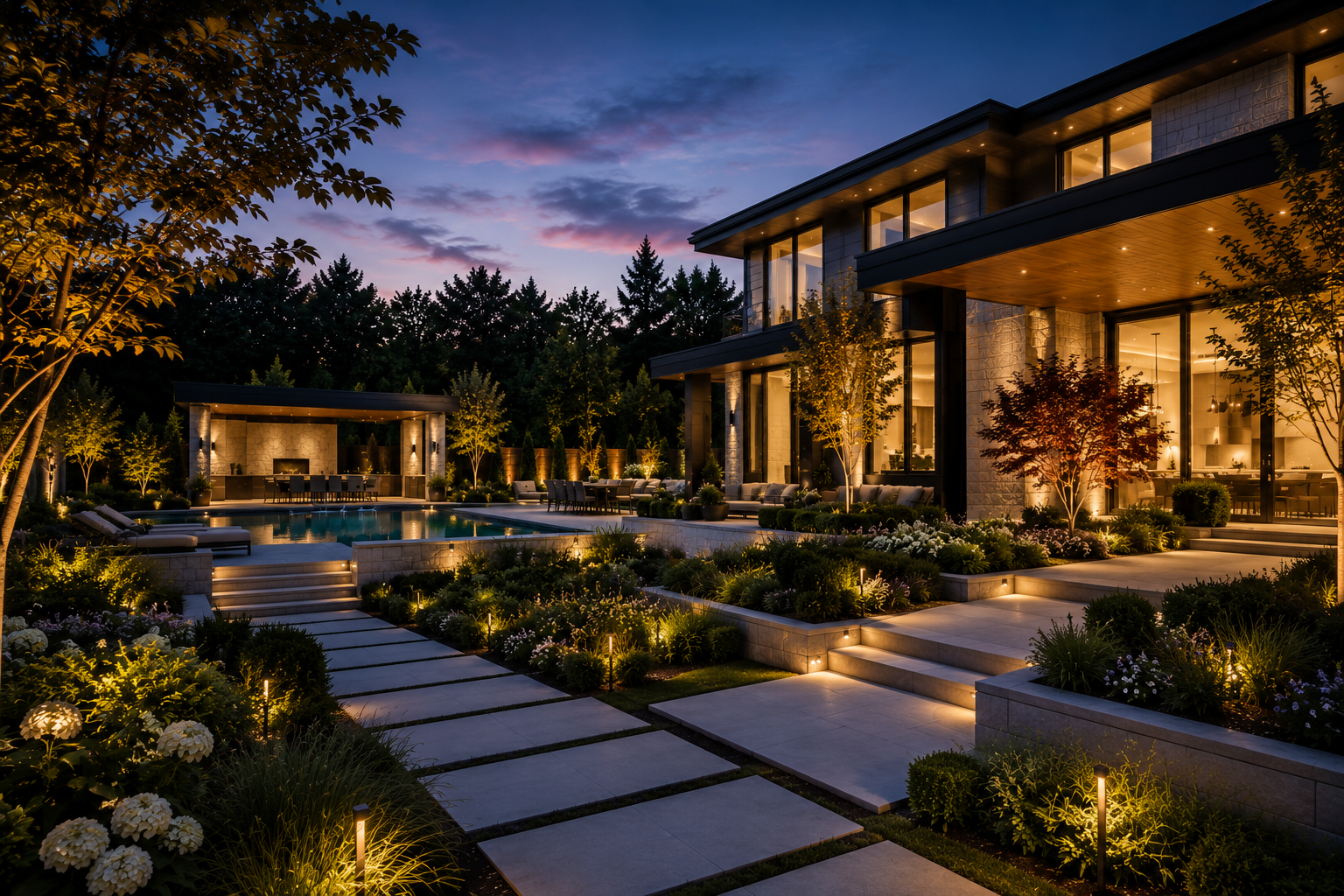
Lighting extends the architectural language established during the day, revealing texture, strengthening perspective, and guiding movement without overwhelming the landscape.
Warm illumination beneath a pavilion creates an inviting outdoor room.
Architectural walls gain depth through carefully controlled shadow.
Garden paths become intuitive to navigate.
Water reflects surrounding light, adding movement and atmosphere throughout the evening.
The goal is never brightness for its own sake.
Instead, lighting should quietly reinforce the composition that already exists, allowing architecture and landscape to remain visually connected long after sunset.
When integrated from the earliest stages of design, lighting becomes one more architectural material within the larger residential environment.
One Vision Creates Timeless Places
The finest residential environments are never remembered because of a beautiful house or a beautiful garden alone.
They are remembered because neither can be imagined without the other.
Architecture shapes the landscape.
The landscape enriches the architecture.
Materials establish continuity.
Planting introduces life.
Outdoor rooms extend everyday living.
Light transforms the experience after sunset.
Each element quietly supports the next until the entire property feels inevitable—as though it could never have been designed any other way.
That is the difference between assembling features and composing a complete residential environment.
It is also the philosophy that guides every project at Mediterra Design & Build.
"Learn more about our Architectural Outdoor Living approach and how integrated design shapes exceptional residential environments."
Conclusion
The strongest residential landscapes are not created by adding features around a completed home. They emerge when architecture and landscape are conceived together from the very beginning, allowing each to strengthen the other through thoughtful planning and careful detailing.
When materials establish continuity, outdoor rooms extend everyday living, planting complements architecture, and lighting reveals the landscape after sunset, the result is far greater than the sum of its individual parts. It becomes a residential environment that feels cohesive, enduring, and deeply connected to the people who live there.
Across Toronto and the Greater Toronto Area, homeowners are increasingly seeking properties that reflect this integrated approach to design—where every decision contributes to one unified vision rather than a collection of separate projects.
At Mediterra Design & Build, we believe the landscape should never feel like an addition to the home. It should feel as though it has always belonged there, creating residential environments where architecture, landscape, and lifestyle exist in complete harmony.