

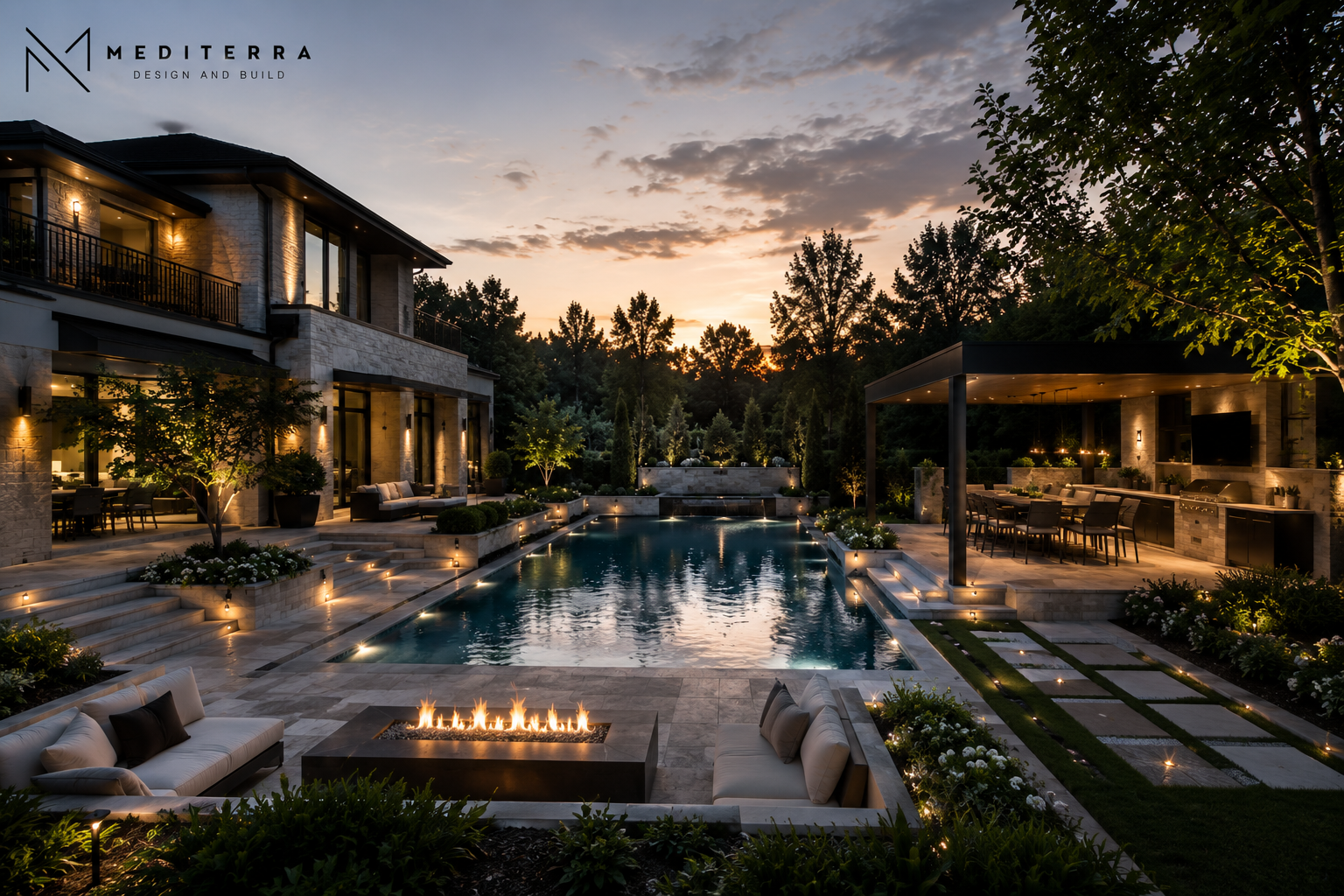
Introduction
Luxury outdoor living has evolved far beyond the idea of creating an attractive backyard.
Today, the most memorable residential properties are designed as complete environments where architecture, landscape, and everyday living are thoughtfully woven together. Rather than functioning as separate spaces, the home and its surroundings become part of a single composition—one that supports entertaining, quiet retreat, family life, and a deeper connection to the outdoors.
This shift reflects a broader change in how homeowners choose to live. Outdoor spaces are no longer viewed as seasonal amenities reserved for occasional gatherings. They have become natural extensions of the home, accommodating everything from morning coffee beneath a covered pavilion to family dinners prepared outdoors, peaceful afternoons beside the pool, and evenings spent around a fire beneath softly illuminated trees.
The most successful outdoor environments rarely rely on extravagant features alone.
Instead, they are guided by timeless design principles.
Architecture establishes order.
Landscape introduces life.
Materials create continuity.
Water brings calm.
Light shapes atmosphere.
Together, these elements create places that feel effortless to experience because every decision has been made with the whole property in mind.
Across Toronto and the Greater Toronto Area, discerning homeowners are increasingly seeking outdoor environments that reflect the same level of architectural consideration found within their homes. The goal is no longer to build individual features, but to create residential environments that feel complete, enduring, and deeply personal.
At Mediterra Design & Build, this philosophy guides every project. Outdoor living is approached not as a collection of separate amenities, but as an integrated design process where architecture, landscape, and lifestyle evolve together from the very beginning.
This guide brings together the core principles behind that approach. Whether you are beginning to explore ideas or preparing to undertake a significant residential transformation, the following pages explain how thoughtful design decisions combine to create outdoor environments that remain beautiful, functional, and relevant for decades to come.
Why Outdoor Living Has Changed
Twenty years ago, the backyard was often considered a place to add a deck, a patio, or perhaps a swimming pool.
Today, it has become something fundamentally different.
As modern homes have become more open, connected, and centred around everyday experiences, outdoor environments have naturally evolved alongside them. Large expanses of glass dissolve the boundary between inside and outside. Interior living spaces extend naturally onto terraces. Covered structures become outdoor living rooms. Kitchens continue beyond the walls of the home, while gardens provide moments of privacy and reflection within increasingly busy urban environments.
This evolution reflects more than changing design trends.
It reflects changing priorities.
Many homeowners today value experiences as much as possessions. They seek places where family naturally gathers, where entertaining feels effortless, and where everyday routines become more enjoyable simply because the environment has been thoughtfully designed around them.
This is why the most successful outdoor environments are rarely created by adding features one at a time.
A pool alone cannot create a memorable property.
Neither can an outdoor kitchen.
Nor a pavilion.
Each becomes meaningful only when considered as part of a larger composition.
Exceptional outdoor living begins not with individual products, but with a clear vision for how the entire property should function, feel, and evolve over time.
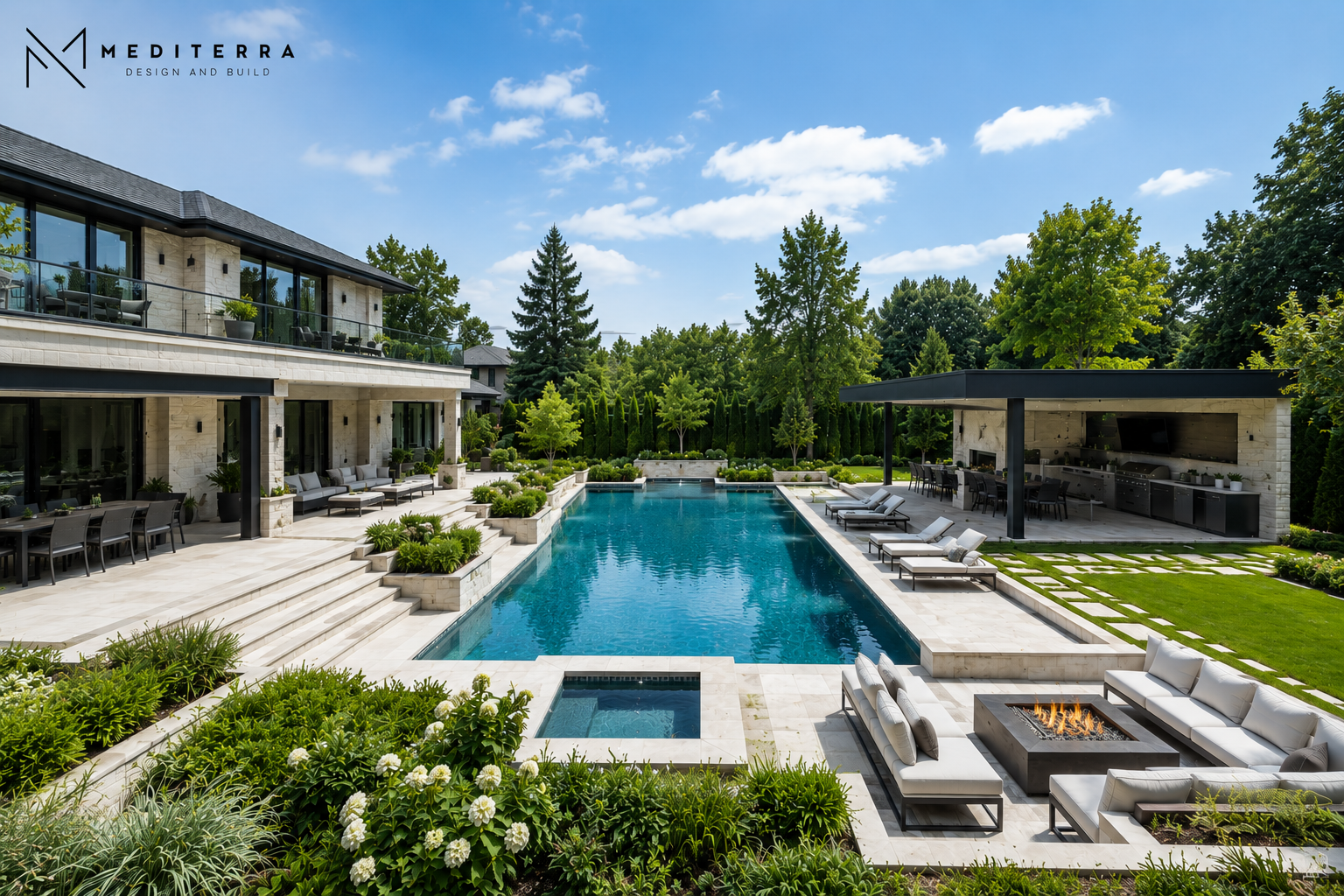
Timeless Design Principles Outlast Design Trends
Design trends inevitably change.
Materials rise and fall in popularity.
Furniture styles evolve.
Colour palettes shift.
The strongest residential environments, however, continue to feel relevant decade after decade because they are guided by principles rather than trends.
Proportion creates comfort.
Restraint creates elegance.
Natural materials mature with character.
Architecture establishes order while landscape introduces movement and life.
Light transforms the experience of a property after sunset without overwhelming it.
Every successful outdoor environment, whether contemporary or traditional, shares these underlying qualities.
This is why exceptional design often feels effortless.
It quietly solves problems before they are noticed.
It guides movement naturally.
It frames views without demanding attention.
It creates places where people instinctively feel comfortable, even if they cannot explain why.
These timeless principles form the foundation of every project discussed throughout this guide.
They also provide the framework that connects every article within the Mediterra Journal into one cohesive philosophy of residential design.
The Principles Behind Exceptional Outdoor Living
Every memorable outdoor environment is built upon a series of timeless principles.
These principles are not dictated by architectural style, project size, or budget. They apply equally to a contemporary residence overlooking Lake Ontario, a traditional estate in King City, or a thoughtfully renovated family home in Toronto.
While every project is unique, the qualities that make outdoor environments feel exceptional remain remarkably consistent.
Rather than asking, "What should we build?", successful projects begin with a more important question:
"How should this place make people feel?"
That shift in thinking changes every decision that follows.
Instead of assembling individual features, the design process becomes one of composing experiences that support the way people live, gather, relax, and connect with their surroundings.
The following principles form the foundation of exceptional residential outdoor living.
Every Outdoor Environment Should Have One Clear Vision
One of the most common reasons outdoor projects feel disconnected is that they evolve one feature at a time.
A patio is added one year.
A pool several years later.
An outdoor kitchen follows.
Perhaps a pergola or pavilion eventually completes the space.
While each addition may be beautifully constructed, the property often lacks a unifying vision because each element was designed independently.
Exceptional outdoor environments begin differently.
Before a single material is selected or construction begins, the entire property is considered as one composition.
Views are established.
Circulation is organized.
Gathering spaces are positioned.
Relationships between architecture, landscape, water, and planting are carefully studied.
Every subsequent decision supports that original vision.
The result is a property where nothing feels accidental and every space contributes naturally to the whole.
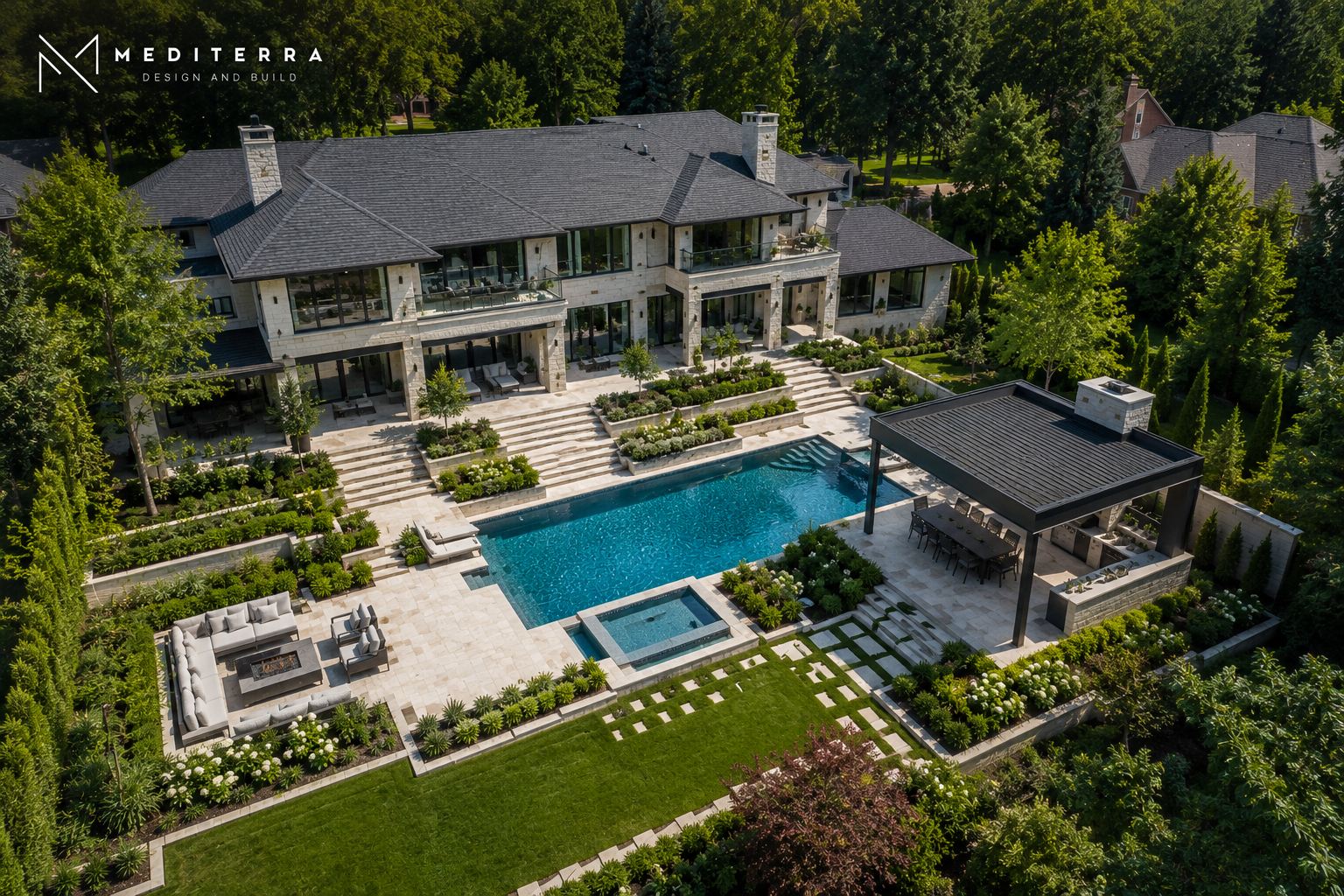
Luxury residential master plan integrating architecture landscape and outdoor living Toronto
Architecture Should Never End at the Exterior Wall
Exceptional homes do not stop where the building ends.
They continue into the landscape.
Terraces extend interior living spaces.
Materials transition naturally beyond the walls of the residence.
Outdoor rooms become comfortable places for everyday living.
Planting frames views while reinforcing the architecture rather than competing with it.
This gradual transition creates one of the defining characteristics of thoughtful residential design: the boundary between indoors and outdoors becomes increasingly difficult to identify.
Rather than feeling like separate environments, the home and landscape become part of the same architectural experience.
This continuity not only strengthens the visual character of the property but also changes the way it is lived in.
Morning routines move outdoors.
Family meals extend onto the terrace.
Quiet evenings unfold beneath a covered pavilion.
The architecture simply continues.
"Explore this philosophy in greater depth in our Integrating Landscape with Residential Architecture Insight article"
Luxury Is Experienced Emotionally Before It Is Appreciated Visually
Many people assume luxury is created through expensive materials or elaborate features.
In reality, lasting luxury is experienced long before individual details are consciously noticed.
It is the feeling of arriving home and immediately sensing calm.
It is moving effortlessly between spaces without thinking about where to go next.
It is sitting beneath a shaded pavilion on a warm afternoon or hearing the gentle sound of water while reading on the terrace.
These experiences are rarely the result of a single design decision.
They emerge from countless carefully considered relationships working together.
Architecture establishes order.
Landscape introduces life.
Light shapes atmosphere.
Water creates tranquillity.
Materials provide continuity.
When these elements support one another, luxury becomes something that is felt rather than simply observed.
This emotional quality is one of the defining characteristics shared by the world's most memorable residential environments.

Great Design Feels Effortless Because It Solves Problems Before They Exist
One of the defining qualities of exceptional design is that it rarely calls attention to itself.
Movement feels intuitive.
Views unfold naturally.
Privacy exists without feeling enclosed.
Outdoor rooms relate comfortably to one another.
Even the smallest details, from the placement of a tree to the alignment of paving joints, quietly contribute to a sense of order.
Homeowners often describe these environments as feeling peaceful or effortless.
What they are actually experiencing is thoughtful planning.
Every successful project is supported by hundreds of small decisions that most people will never consciously notice.
Together, those decisions create places that simply feel right.
This is the quiet discipline behind timeless residential design.
The Elements of Exceptional Outdoor Living
Once a clear vision has been established, the individual elements of an outdoor environment begin to take shape.
Pools.
Outdoor kitchens.
Covered structures.
Planting.
Materials.
Lighting.
Each plays an important role.
Yet none should ever be designed in isolation.
Like the individual instruments within an orchestra, each contributes something unique while supporting a much larger composition. When thoughtfully integrated, they create outdoor environments that feel calm, balanced, and effortless to experience.
Understanding the role each element plays is one of the keys to creating residential environments that remain timeless.
Water Brings Calm, Reflection, and Order
Water has long been one of the defining elements of exceptional residential landscapes.
Beyond recreation, it introduces qualities that architecture alone cannot achieve. It reflects changing light throughout the day, softens surrounding sounds, and introduces movement that continually changes the atmosphere of the landscape.
Thoughtfully positioned pools also help organize the property itself. Terraces naturally orient toward the water. Seating areas enjoy carefully framed views. Covered structures establish comfortable transitions between architecture and the landscape beyond.
Rather than functioning simply as an amenity, water often becomes the element that quietly brings the entire outdoor composition together.
I

Outdoor Kitchens Bring People Together
While pools often establish the visual heart of an outdoor environment, outdoor kitchens frequently become its social centre.
Preparing meals outdoors changes the rhythm of gatherings. Rather than separating the host from guests, cooking becomes part of the shared experience. Family and friends naturally gather around preparation spaces, dining terraces, and adjacent lounge areas, allowing conversation to continue throughout the evening.
The most successful outdoor kitchens are therefore designed as places where people gather not simply places where food is prepared.
Positioned thoughtfully in relation to dining spaces, covered structures, and circulation throughout the property, they become one of the defining destinations within the landscape.
"Learn how outdoor kitchens become the heart of residential gathering spaces in our Designing the Ultimate Outdoor Kitchen Insight article."
.png)
Materials Give the Landscape Its Character
Architecture communicates through materials as much as through form.
Natural stone introduces warmth and permanence.
Large-format porcelain creates precision and continuity.
Timber softens contemporary architecture while steel provides clarity and structure.
Individually, these materials are beautiful.
Together, they establish the visual language of the entire property.
Restrained palettes often prove more enduring than elaborate combinations, allowing architecture, planting, and light to remain the focus rather than competing finishes.
Thoughtfully selected materials also ensure that outdoor environments continue to age gracefully, developing character while maintaining the integrity of the original design.
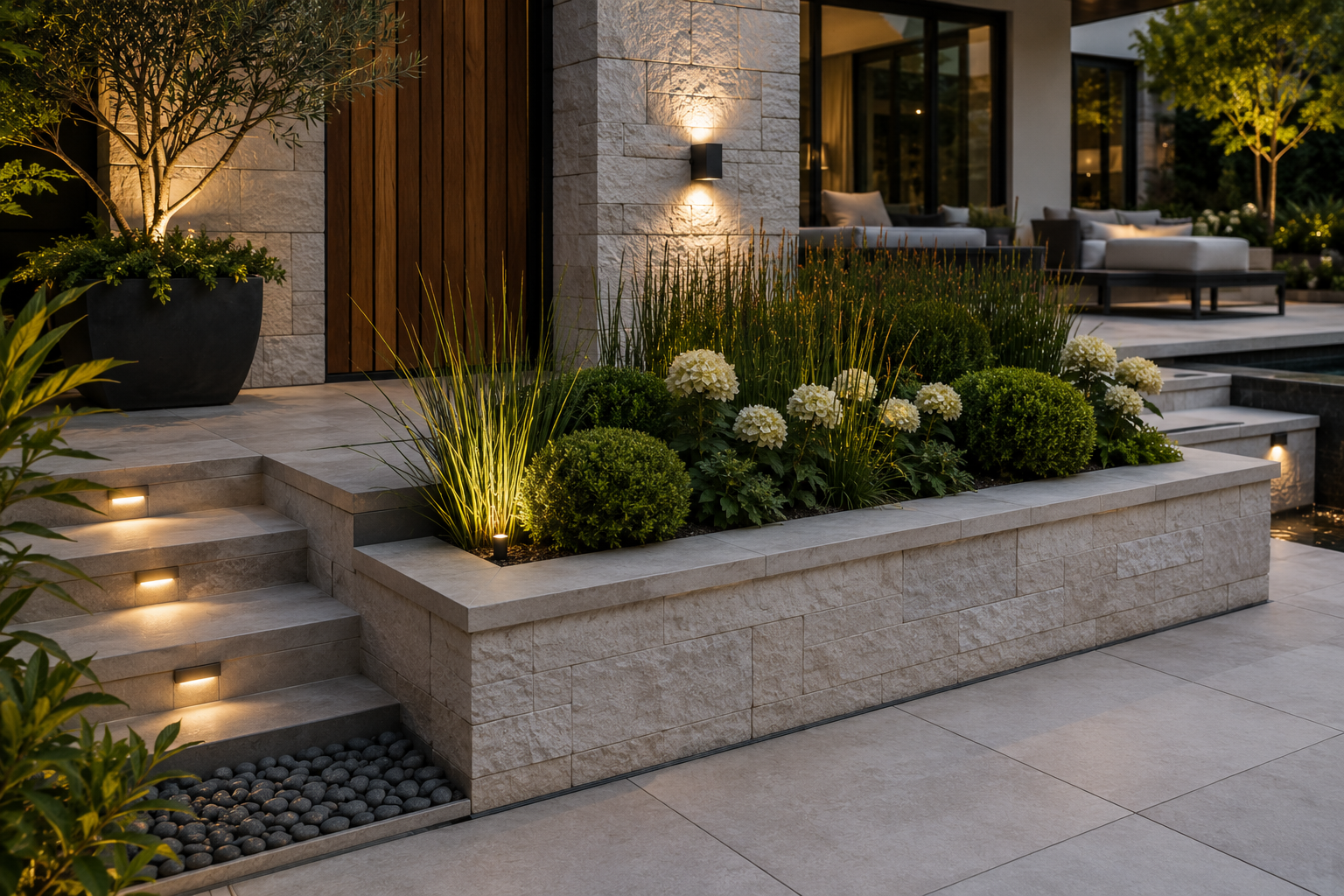
Outdoor Rooms Extend Everyday Living
Perhaps the greatest transformation in residential design has been the evolution of outdoor spaces into fully realized rooms.
Covered pavilions, comfortable lounge areas, dining terraces, fire features, and quiet garden retreats all support different moments throughout the day while remaining visually connected to one another.
Just as interior architecture organizes spaces according to purpose, outdoor rooms create environments that encourage gathering, relaxation, reflection, and celebration.
When carefully positioned within the broader landscape, these spaces allow homeowners to experience their property in many different ways rather than from one central patio.
The home gradually expands beyond its walls.
Everyday life expands with it.
"Explore how thoughtfully designed covered structures extend residential architecture in our Pavilion Design for Four-Season Outdoor Living Insight article."
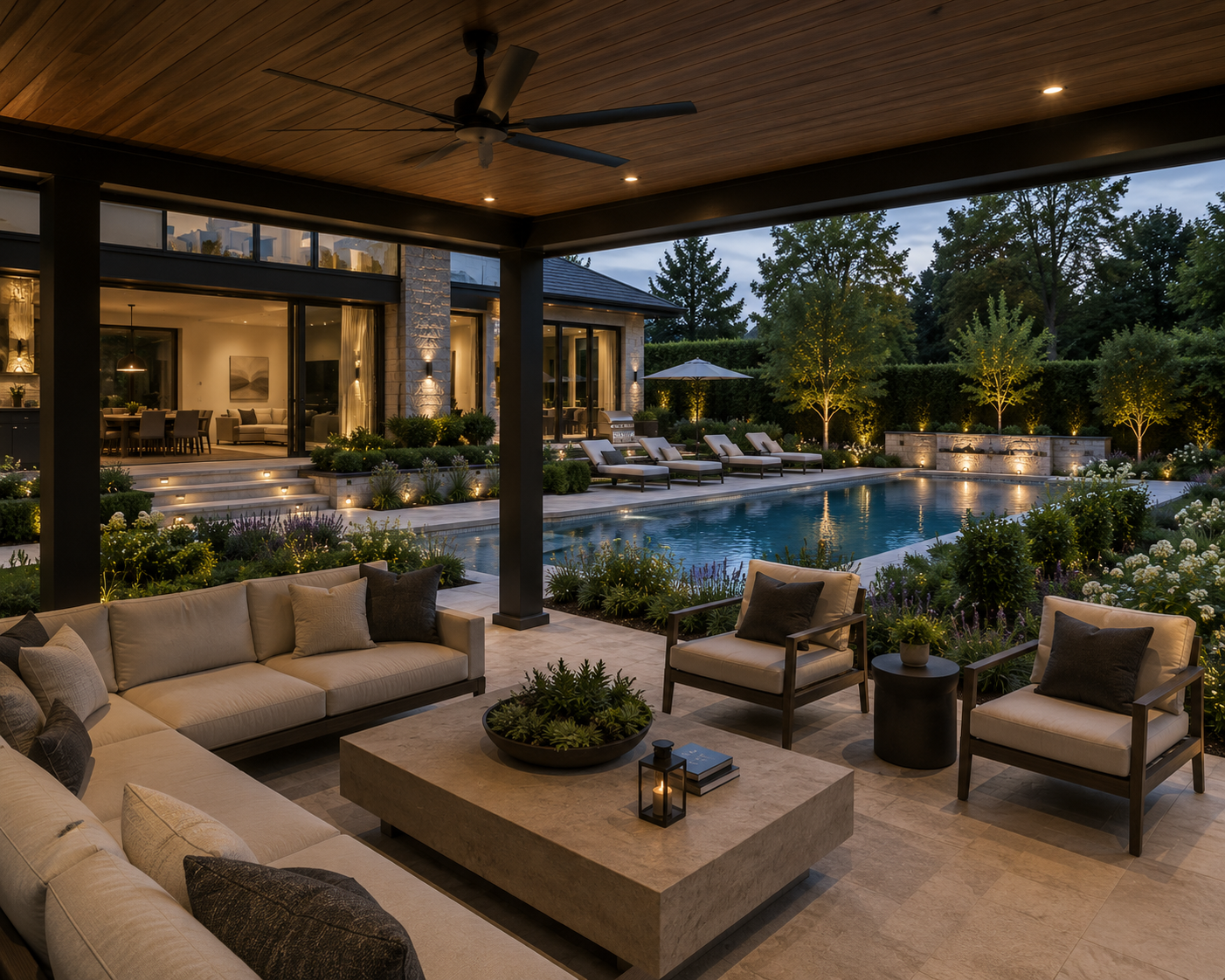
Light Brings the Landscape to Life
As daylight fades, one final material quietly transforms the entire environment.
It is not stone.
It is not timber.
It is not water.
It is light.
Throughout the day, the landscape is experienced through natural sunlight. After sunset, carefully composed lighting assumes that role, revealing architecture, emphasizing texture, guiding movement, and shaping atmosphere with remarkable subtlety.
Exceptional lighting is never measured by brightness alone.
Instead, it quietly reinforces the architecture that already exists.
Stone walls gain depth.
Trees become sculptural forms against the evening sky.
Water reflects gentle movement and colour.
Outdoor rooms remain warm and inviting long after the sun has disappeared.
Rather than eliminating darkness, thoughtful lighting uses shadow as an essential part of the composition, creating contrast that allows every element of the landscape to feel intentional.
When integrated from the earliest stages of design, lighting becomes one of the most powerful architectural materials within the entire property.

Luxury outdoor lighting integrated with residential architecture Toronto
Bringing Everything Together
By this point, one thing has likely become clear.
Pools alone do not create exceptional outdoor environments.
Neither do outdoor kitchens.
Or beautiful planting.
Or premium materials.
Or dramatic lighting.
Each contributes something important.
But the true quality of a residential landscape is found in the relationships between them.
Architecture establishes order.
Landscape introduces life.
Materials create continuity.
Water brings calm.
Light shapes atmosphere.
Outdoor rooms support everyday living.
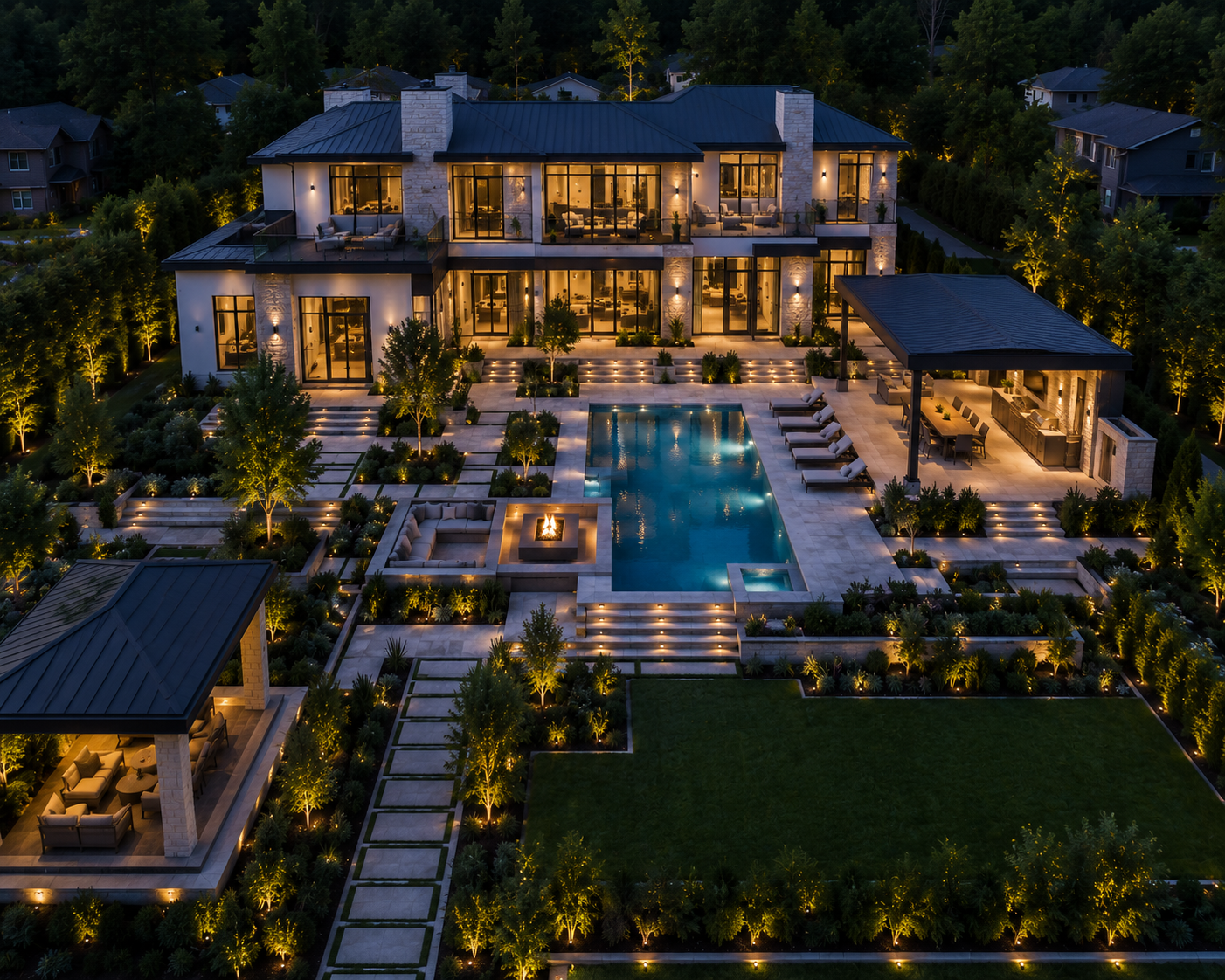
Together, these elements create environments that feel effortless because they were conceived as one unified vision rather than assembled over time.
This integrated way of thinking lies at the heart of architectural outdoor living.
Rather than viewing the property as a collection of separate projects, the entire residence is considered as one connected environment where every decision strengthens the next.
It is this philosophy that transforms beautiful backyards into timeless residential landscapes.
Why the Design Process Matters as Much as the Design
One of the most common reasons outdoor projects fail to achieve this level of cohesion is not because individual features are poorly designed.
It is because they are designed independently.
A homeowner may work with one company for the pool.
Another for the landscape.
A third for the outdoor kitchen.
Lighting may be introduced near the end of construction.
Planting follows afterward.
Although each contributor may produce excellent work, no one has been responsible for shaping the entire experience.
The result often feels fragmented.
Exceptional residential environments begin differently.
The entire property is considered before construction begins.
Architecture, circulation, grading, materials, lighting, drainage, planting, structures, and long-term use are all evaluated together.
This integrated process allows every decision to reinforce the overall vision while avoiding the compromises that frequently arise when individual elements are designed in isolation.
For homeowners, this means a smoother design experience, fewer conflicts during construction, and a finished property where every component feels as though it has always belonged there.
The Value of an Integrated Design-Build Approach
Creating a cohesive residential environment requires more than thoughtful ideas.
It requires careful coordination from the earliest design sketches through the final stages of construction.
Design decisions influence structural requirements.
Material selections affect detailing.
Drainage impacts paving.
Lighting must be coordinated before hardscape is installed.
Planting relies on grading, irrigation, and long-term growth patterns.
Because every discipline influences the next, successful projects benefit from a process where design and construction evolve together rather than separately.
This collaborative approach helps preserve the original design intent while reducing unnecessary revisions, improving communication, and maintaining consistency throughout the project.
For homeowners undertaking significant residential transformations, this continuity often becomes one of the greatest advantages of the entire process.
"Learn more about the differences between integrated design-build and traditional project delivery in our Design-Build vs. Traditional Contractingguide."
Planning for Long-Term Value
Perhaps the greatest misconception surrounding luxury outdoor living is that it begins with selecting products.
In reality, it begins with planning.
The strongest residential environments are rarely created through impulse decisions or isolated improvements.
They emerge from a carefully developed vision that considers how the property will be experienced not only next summer, but ten or twenty years into the future.
Thoughtful planning allows investments to be prioritized intelligently.
It ensures that infrastructure supports future additions.
It prevents unnecessary demolition.
Most importantly, it protects the integrity of the overall design.
Whether a project is completed in one phase or thoughtfully developed over time, beginning with a comprehensive master plan allows every future decision to contribute toward one cohesive outcome.
"Explore how thoughtful planning influences investment decisions in our Understanding the Cost of Luxury Outdoor Living guide."
The Enduring Value of Thoughtful Design
Perhaps the greatest measure of an outdoor environment is not how impressive it appears on the day construction is completed.
It is how naturally it becomes part of everyday life in the years that follow.
The finest residential landscapes quietly adapt to changing seasons, evolving routines, and growing families. Children who once learned to swim eventually return with families of their own. Summer dinners become cherished traditions. Friends gather beneath a pavilion on warm evenings. Morning coffee finds its place on a favourite terrace. Gardens mature, trees grow into the spaces imagined years earlier, and every season introduces a different way of experiencing the property.
The architecture remains familiar.
The landscape continues to evolve.
Together, they tell the story of the home itself.
This is why exceptional outdoor environments should never be judged solely by the materials they contain or the features they include. Their true value lies in the countless everyday moments they quietly support.
Thoughtful design creates more than beautiful spaces.
It creates places where life unfolds naturally.
.png)
A Philosophy That Endures
Throughout this guide, one idea has quietly connected every topic.
Pools.
Outdoor kitchens.
Pavilions.
Materials.
Lighting.
Gardens.
Each contributes something meaningful.
Yet none defines exceptional outdoor living on its own.
The strongest residential environments emerge when every decision supports a single architectural vision.
A vision where the home extends naturally into the landscape.
Where materials create continuity rather than contrast.
Where planting introduces movement without overwhelming the architecture.
Where light shapes atmosphere instead of demanding attention.
Where outdoor rooms feel as comfortable and purposeful as those found within the home itself.
When these relationships are thoughtfully composed, the property begins to feel inevitable; as though architecture and landscape could never have existed any other way.
That sense of harmony cannot be purchased through premium products alone.
It is achieved through careful planning, thoughtful collaboration, and a commitment to designing the entire environment rather than individual features.
This philosophy guides every project at Mediterra Design & Build.
It is also the philosophy that connects every article within the Mediterra Journal.
Together, they form a growing body of knowledge dedicated to helping homeowners understand not simply what to build, but why exceptional residential environments endure.
Begin With a Vision
Every remarkable property begins with a decision.
Not a decision about materials.
Or construction.
Or even budget.
It begins with the decision to think about the home as a complete environment.
When architecture, landscape, and lifestyle are considered together from the outset, every future decision becomes more purposeful. Investments support one another. Construction proceeds with greater clarity. Most importantly, the finished property feels cohesive because it has been guided by one vision from the very beginning.
Whether your plans involve a comprehensive transformation or a carefully phased master plan developed over time, the same principle remains true:
The most successful residential environments are never assembled.
They are thoughtfully composed.
At Mediterra Design & Build, we believe exceptional outdoor living is not about creating a backyard.
It is about shaping a place where architecture, landscape, and everyday life exist in complete harmony—creating a home that becomes more meaningful with every passing season.
Exceptional outdoor living is built upon many interconnected design principles. Explore the articles below to learn more about each topic in greater depth: