

Protecting the Vision: Design-Build vs. Traditional Contracting
Introduction
Every significant residential project begins with a vision.
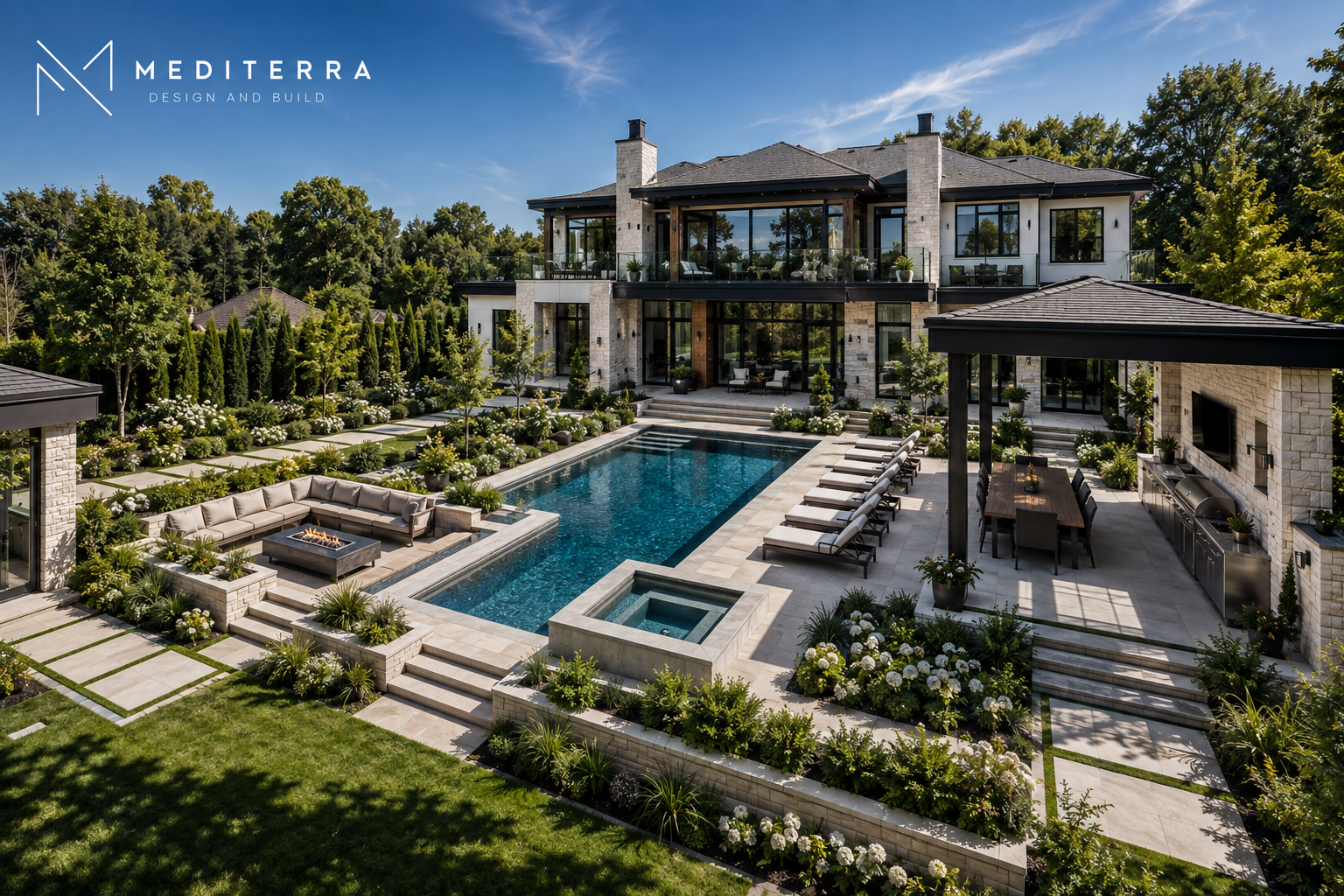
Homeowners imagine mornings on a sunlit terrace, family dinners prepared in an outdoor kitchen, children gathering around the pool, and quiet evenings beneath a covered pavilion as the landscape gradually matures around them.
In those early conversations, the project feels complete.
Every space relates naturally to the next.
The experience appears effortless.
Yet between those first ideas and the day construction is completed, something can quietly happen.
The original vision begins to change.
Not because the individual trades lack skill.
Not because the materials are inferior.
But because each decision is often made independently, without someone responsible for protecting the relationship between the entire property.
A pool is repositioned.
The outdoor kitchen shifts slightly.
Drainage requirements alter the grading.
Lighting is introduced later.
Planting adapts to accommodate changes.
Each adjustment may appear minor on its own, yet together they gradually reshape the original design.
The finished project may still be beautifully constructed.
But it no longer feels quite the way it did when the vision was first imagined.
This is one of the fundamental differences between traditional contracting and an integrated design-build approach.
One focuses on constructing individual components.
The other begins by protecting the overall vision.
Across Toronto and the Greater Toronto Area, homeowners undertaking complex residential transformations are increasingly recognizing the value of this integrated approach. As projects become more sophisticated, thoughtful coordination becomes just as important as craftsmanship itself.
Why Great Projects Sometimes Lose Their Way
Large residential projects rarely fail because individual contractors lack expertise.
In fact, many involve exceptionally talented professionals.
The challenge is coordination.
A pool contractor naturally focuses on the pool.
A mason concentrates on stonework.
An electrician prioritizes lighting infrastructure.
Landscape crews install planting.
Cabinet specialists build the outdoor kitchen.
Each contributes valuable knowledge within their own discipline.
Yet no individual trade is typically responsible for protecting how every decision influences the overall composition of the property.
As the project progresses, practical adjustments are often made to solve immediate challenges.
A utility line requires relocation.
Drainage conditions affect finished grades.
Structural requirements modify a pavilion.
One change influences another.
Gradually, the carefully balanced relationships established during the original design begin to shift.
None of these decisions are necessarily wrong.
They simply illustrate how easily the broader vision can become fragmented when every discipline works independently.
Exceptional residential environments require more than excellent execution.
They require someone who continues asking the same question throughout the entire project:
"Does this decision strengthen the original vision?"

Design Begins Long Before Construction
One of the most common misconceptions surrounding residential construction is that building begins when excavation starts.
In reality, the most important construction decisions are often made months earlier.
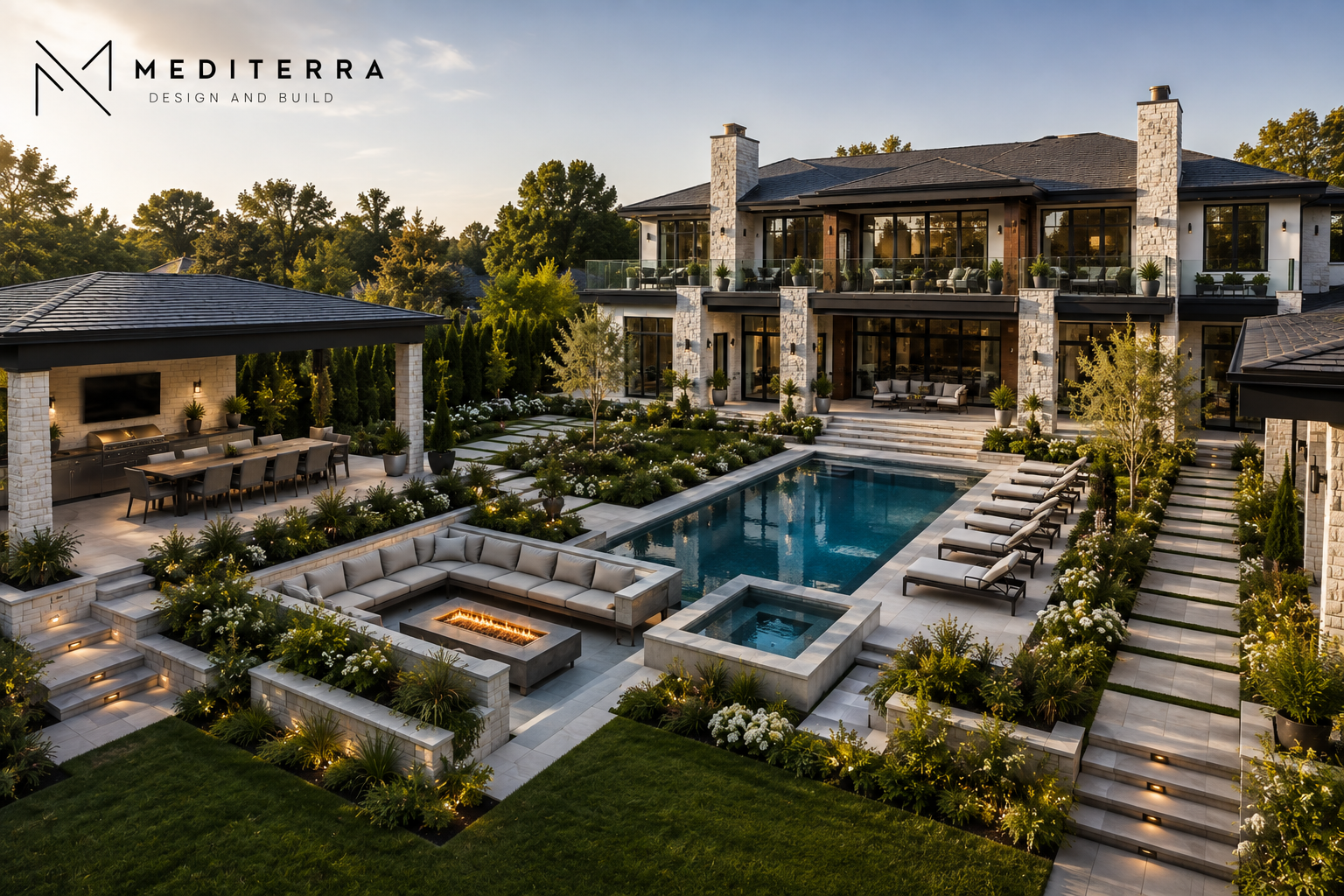
Before a shovel ever reaches the ground, the relationships between architecture, landscape, utilities, grading, materials, circulation, and structural requirements have already begun to shape the future success of the project.
Thoughtful planning allows these decisions to support one another rather than compete.
Drainage is considered before paving is detailed.
Lighting infrastructure is coordinated before concrete is poured.
Pool equipment, irrigation, utilities, and planting are integrated into the broader design rather than accommodated afterward.
Every decision becomes part of a larger strategy.
Construction then becomes the careful execution of a well-developed vision rather than a series of independent solutions created on site.
This approach rarely eliminates every challenge.
Construction is inherently dynamic.
However, it significantly reduces unnecessary compromises because the project has been thoughtfully coordinated from the very beginning.
Projects that appear effortless upon completion are rarely simple.
They are simply well planned.
One Decision Influences Every Other Decision
One of the defining characteristics of exceptional residential projects is that every design decision influences many others.
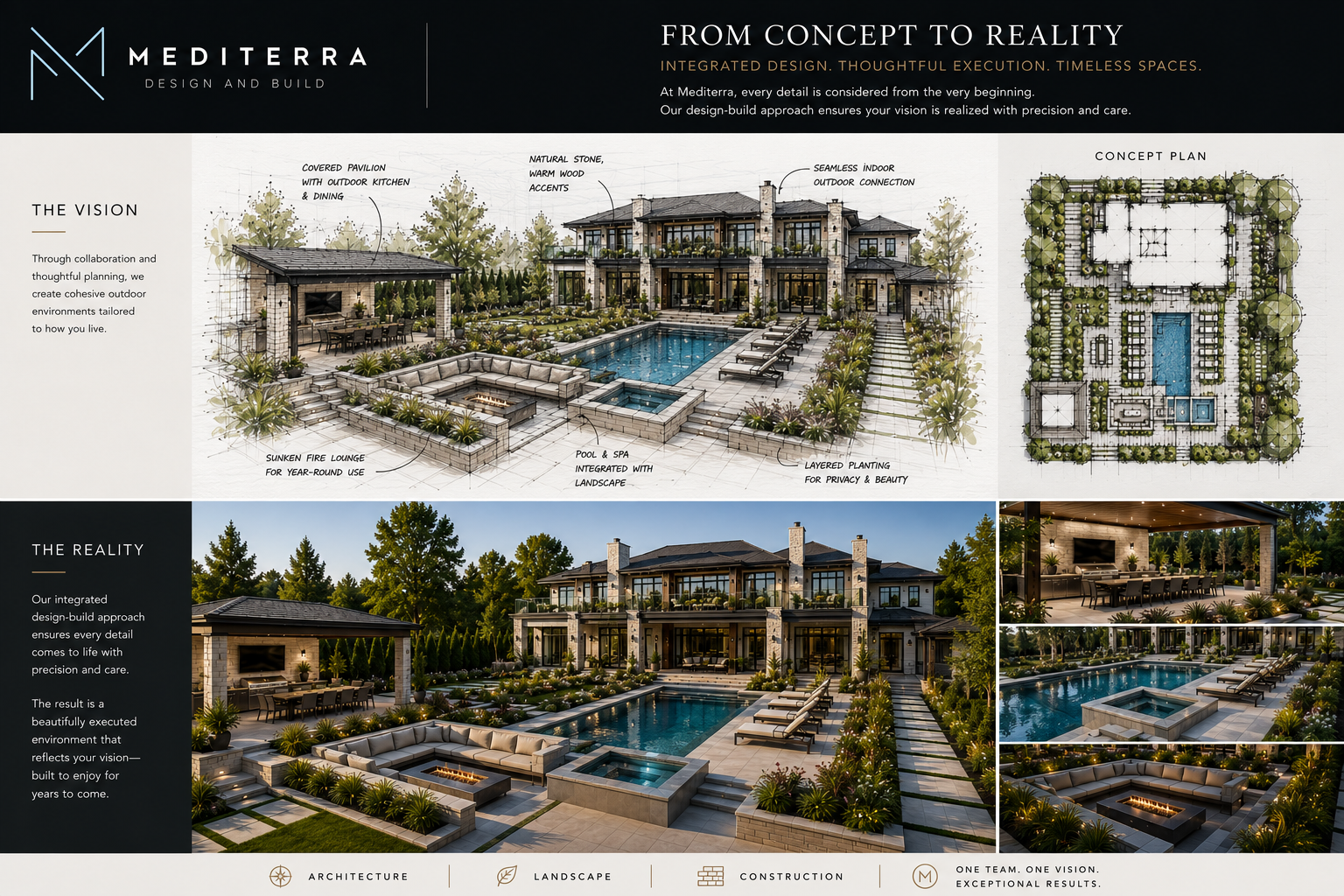
Moving a pool by only a few feet may affect circulation through the landscape, alter drainage patterns, change lighting locations, influence planting layouts, and reshape views from the interior of the home.
Selecting one paving material may influence stair detailing, coping profiles, expansion joints, and transitions into the residence.
Even the placement of a mature tree can affect shade patterns, privacy, sightlines, and the character of outdoor gathering spaces for decades to come.
These relationships are often invisible during the early planning stages, yet they become increasingly significant as construction progresses.
This is why thoughtful design is never a sequence of isolated decisions.
Every choice should strengthen the larger composition rather than solve only an immediate challenge.
When the entire property is considered together, individual decisions begin supporting one another naturally.
The result is an outdoor environment where nothing feels forced because every element has been allowed to evolve as part of the same architectural vision.
The Design-Build Process Is About Protecting Design Intent
The greatest strength of an integrated design-build approach is not simply that design and construction occur under one roof.
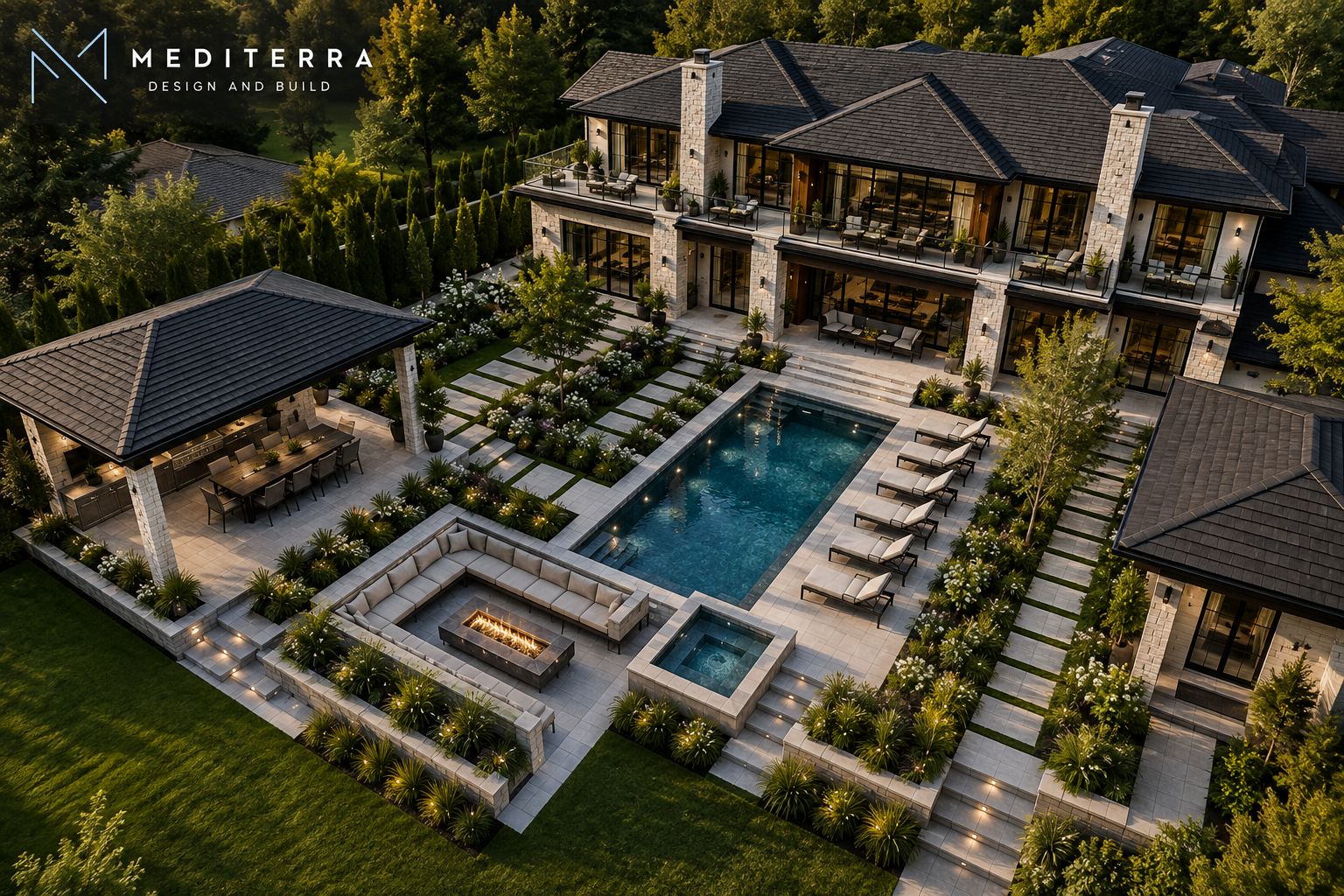
Its true value lies in protecting the original design intent throughout the entire project.
As construction unfolds, countless decisions must be made.
Site conditions may reveal unexpected challenges.
Material availability can change.
Technical requirements evolve.
Each situation requires thoughtful problem-solving.
When the original design team remains actively involved throughout construction, these adjustments can be made while preserving the overall vision rather than compromising it.
Questions become opportunities to refine rather than redesign.
Solutions are evaluated not only for their practicality but also for how they influence the completed environment.
This continuity allows the project to remain true to the ideas that inspired it from the very beginning.
The objective is not to prevent change.
It is to ensure that change strengthens the design rather than gradually moving away from it.
Collaboration Should Simplify the Process
Large residential projects involve many disciplines working together.
Architecture.
Landscape.
Structural engineering.
Pool construction.
Electrical systems.
Stone fabrication.
Planting.
Irrigation.
Lighting.
Each contributes specialized expertise.
When coordination is fragmented, homeowners often become the central point of communication between multiple consultants and contractors, making it difficult to understand how one decision may influence another.
An integrated design-build process changes that dynamic.
Instead of managing a collection of separate conversations, homeowners participate in one coordinated design dialogue where every discipline works toward the same objective.
Questions are answered within the broader context of the project.
Decisions are made with greater clarity.
Potential conflicts are often identified before they reach the construction site.
The process becomes less about managing complexity and more about creating confidence.
For many homeowners, that confidence becomes just as valuable as the finished landscape itself.
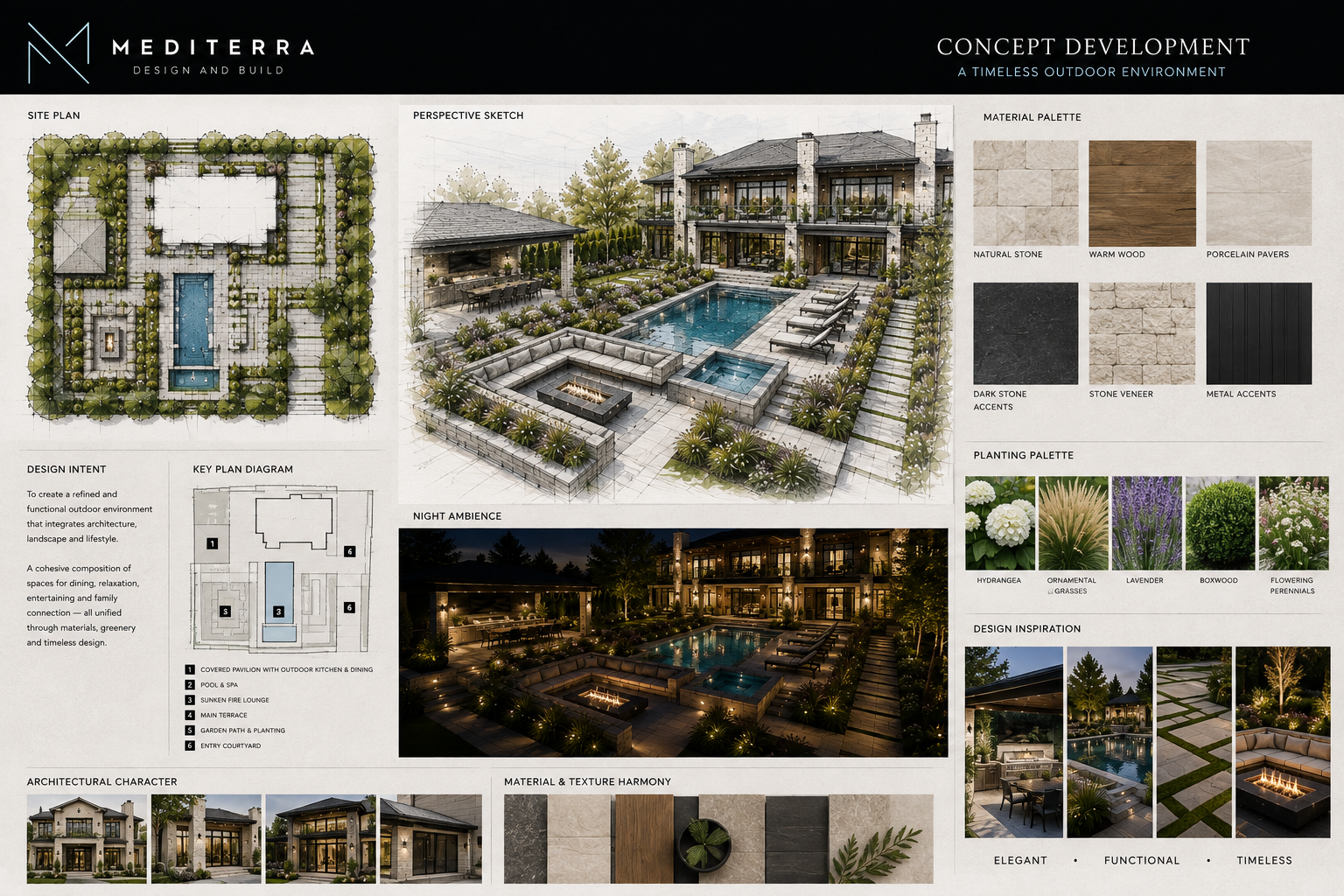
A Great Design-Build Firm Thinks Before It Builds
Construction is essential.
Craftsmanship matters.
Attention to detail matters.
Execution matters.
But exceptional residential environments begin long before those skills are required.
They begin with thoughtful observation.
Understanding how a family lives.
Studying how sunlight moves across the property.
Considering views from inside the home.
Planning how the landscape will mature over time.
Evaluating how every outdoor space will be experienced throughout the changing seasons.
Only then does construction begin.
The role of a design-build practice is therefore not simply to build what has already been imagined.
It is to think deeply enough that what is ultimately built feels inevitable.
That philosophy guides every successful residential transformation.
It also reflects the approach that has quietly connected every article throughout this journal.
"Explore how integrated planning shapes complete residential environments in our The Complete Guide to Architectural Outdoor Living guide."
"Learn how architecture and landscape evolve together in our Integrating Landscape with Residential Architecture Insight article."
Choosing the Right Design Partner
Selecting the right team for a significant residential transformation involves far more than comparing quotations or reviewing portfolios.
Every experienced contractor can point to successful projects.
Every designer can present attractive renderings.
The more meaningful question is something much deeper.
How does this team think?
Do they begin by understanding how you want to live within the space, or do they begin by discussing products and construction?
Do they view the property as a collection of individual projects, or as one complete residential environment?
Can they explain not only what they recommend, but why those decisions strengthen the overall composition of the home?
These questions often reveal far more than photographs or specifications ever can.
The finest residential projects are rarely defined by individual features alone. They are shaped by countless thoughtful decisions that quietly reinforce one another throughout the entire design and construction process.
That level of consistency begins with the people entrusted to guide the project.
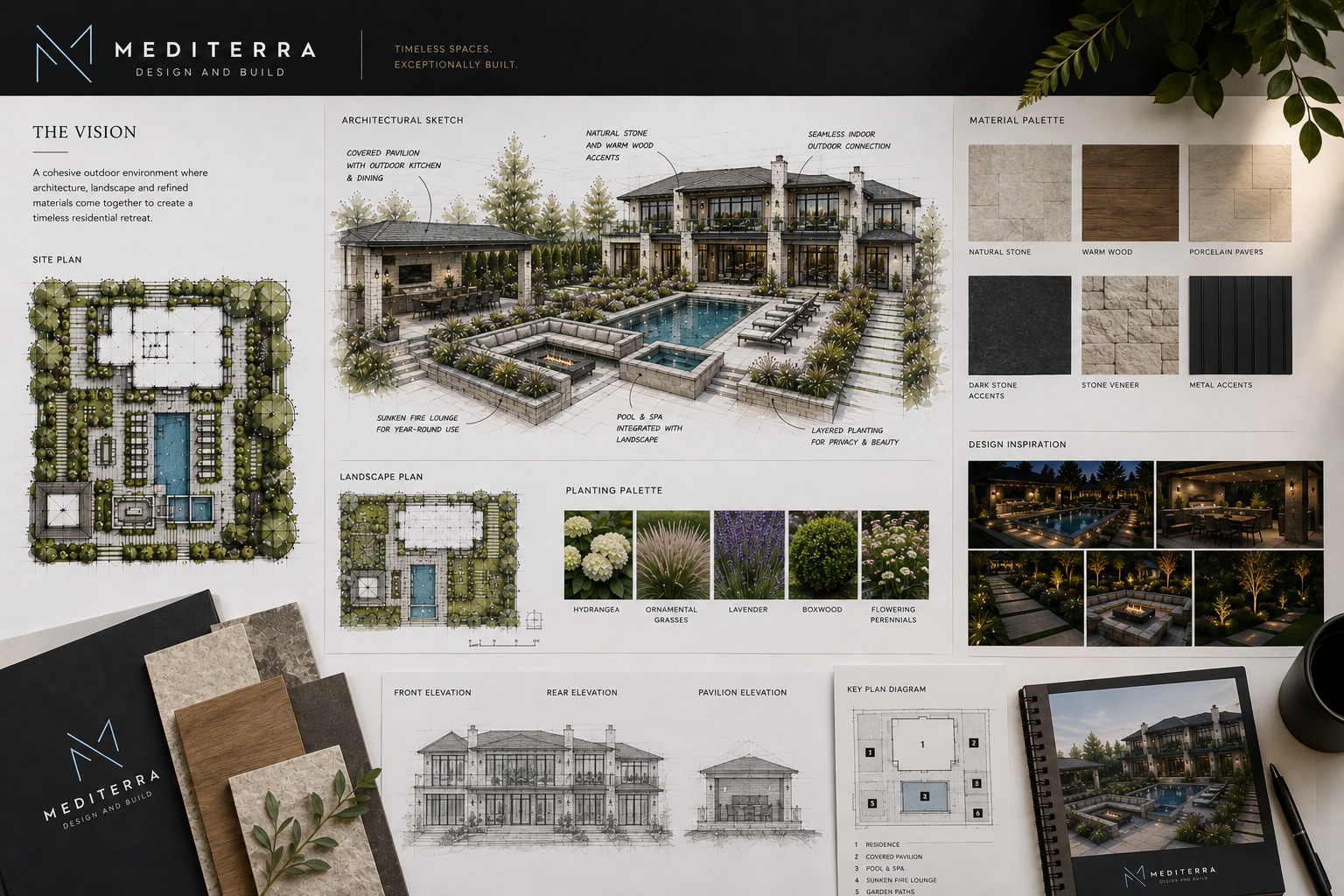
The Steward of Your Vision
Every project begins with excitement.
Ideas are shared.
Possibilities are explored.
A vision begins to take shape.
From that moment forward, every decision either strengthens that vision or gradually moves it further away.
Materials are selected.
Details are refined.
Unexpected site conditions arise.
Construction questions require answers.
Priorities evolve.
The role of a design-build practice is not simply to manage those decisions.
It is to protect the original vision while allowing it to mature through thoughtful collaboration and careful execution.
In many ways, the team responsible for guiding a project becomes the steward of that vision.
Their responsibility extends beyond coordinating trades or scheduling construction.
They protect the relationships between architecture, landscape, materials, craftsmanship, and the way the finished environment will ultimately be experienced.
When that responsibility is embraced from the very beginning, the completed project often feels remarkably natural.
Not because every decision was easy.
But because every decision remained connected to one guiding idea.
Thoughtful Design Leaves a Lasting Legacy
Years after construction has finished, homeowners rarely remember the day concrete was poured or when the final stone was installed.
They remember something far more meaningful.
Morning coffee on the terrace as the garden awakens each spring.
Children learning to swim beneath the watchful eyes of family gathered nearby.
Summer dinners that quietly become annual traditions.
Conversations continuing beneath a pavilion long after sunset.
Autumn evenings around a fire as mature trees begin changing colour.
These are the moments thoughtful design quietly makes possible.
Architecture provides the framework.
Landscape brings it to life.
Time enriches both.
The greatest success of any residential environment is not measured by the number of features it contains, but by the life it continues to support for years, and often generations to come.
That is the enduring value of exceptional design.
Conclusion
Throughout this journal, we have explored the principles that shape exceptional residential environments.
We have examined how architecture extends into the landscape, how materials create continuity, how water introduces calm, how lighting transforms atmosphere, and how thoughtfully designed outdoor rooms encourage connection and everyday living.
Each topic has revealed a different aspect of the same philosophy.
Exceptional outdoor living is never created through individual features alone.
It emerges when every decision contributes to one carefully considered vision.
That vision deserves to be protected from the first conversation through the final day of construction.
At Mediterra Design & Build, we believe the finest residential environments are never assembled one element at a time.
They are thoughtfully conceived, carefully coordinated, and crafted with an understanding that architecture, landscape, and everyday life should exist in complete harmony.
Because ultimately, the greatest luxury is not found in the features surrounding a home.
It is found in the life those spaces quietly make possible.