

Introduction
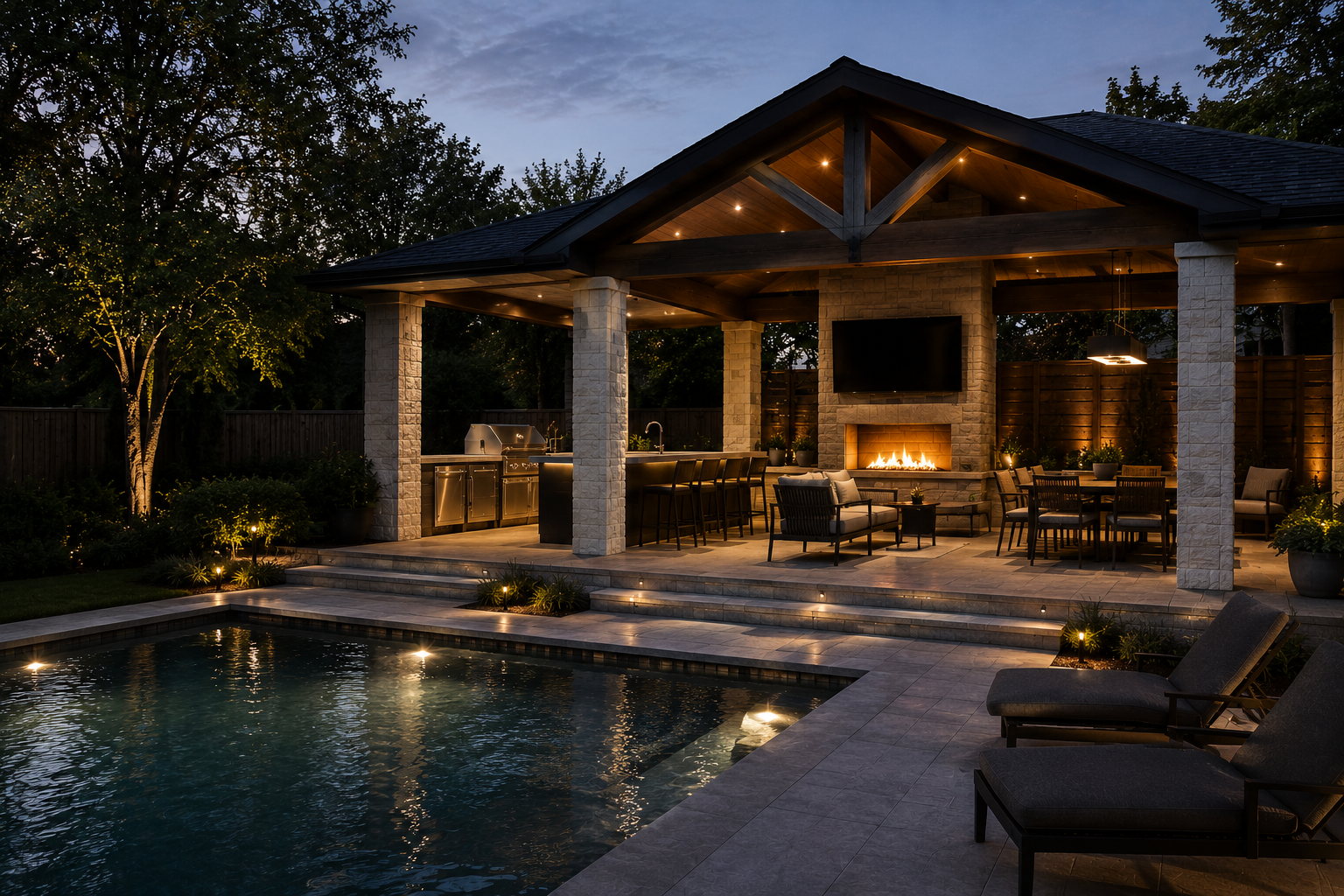
Covered outdoor structures have become an essential component of modern outdoor living environments). Among these, pavilions offer one of the most versatile and visually striking ways to extend the usability of outdoor space.
A thoughtfully designed pavilion provides shelter from sun and rain while creating a defined gathering area for dining, relaxation and entertaining.
In the Greater Toronto Area, where seasonal conditions can vary significantly throughout the year, these structures allow homeowners to enjoy their landscapes well beyond the peak summer months.
At Mediterra Design & Build, pavilion design is approached as part of a comprehensive outdoor living strategy, where architecture, landscape and lifestyle are carefully considered. As part of the overall backyard investment , pavilion structures often play a key role in shaping how outdoor environments are used throughout the year.
The Pavilion as an Outdoor Room
Much like interior spaces within a home, pavilions create defined outdoor rooms that support specific activities.
These structures provide a sense of enclosure while maintaining open connections to surrounding landscape areas.
Pavilion spaces are often used for:
• outdoor dining environments
• lounge seating areas
• outdoor kitchens
• fireplace gathering spaces
• poolside retreats
When integrated thoughtfully into the broader landscape, the pavilion often becomes one of the central architectural elements of the backyard.

Positioning the Pavilion
The location of a pavilion plays a major role in how the structure interacts with the surrounding outdoor environment.
Pavilions may be positioned:
• adjacent to the home to extend interior living spaces
• near the pool to create shaded seating areas
• within garden settings to provide quiet retreats
• alongside outdoor kitchens to create sheltered dining areas
Careful positioning ensures the pavilion contributes to the organization of the landscape while maintaining strong visual relationships with the architecture of the home.
Structural Design and Architectural Character
The structural design of a pavilion significantly influences its visual character.
Traditional designs may incorporate heavy timber framing, while contemporary structures may utilize steel or engineered systems that complement modern architecture.
Common pavilion roof styles include:
• gable roofs
• hip roofs
• vaulted ceilings with exposed beams
• contemporary flat roof structures
Material selection should align with the architectural language of the residence so the pavilion feels like a natural extension of the home.

Designing for Comfort Across Seasons
One of the greatest advantages of pavilion structures is their ability to extend the usability of outdoor environments across multiple seasons.
In climates such as Southern Ontario, several design strategies can significantly improve comfort throughout the year.
These may include:
• outdoor fireplaces or fire features
• integrated heating systems
• ceiling fans for summer airflow
• partial enclosures or screens that reduce wind exposure
These elements allow pavilion spaces to remain comfortable during cooler evenings and transitional seasons.
Lighting and Evening Atmosphere
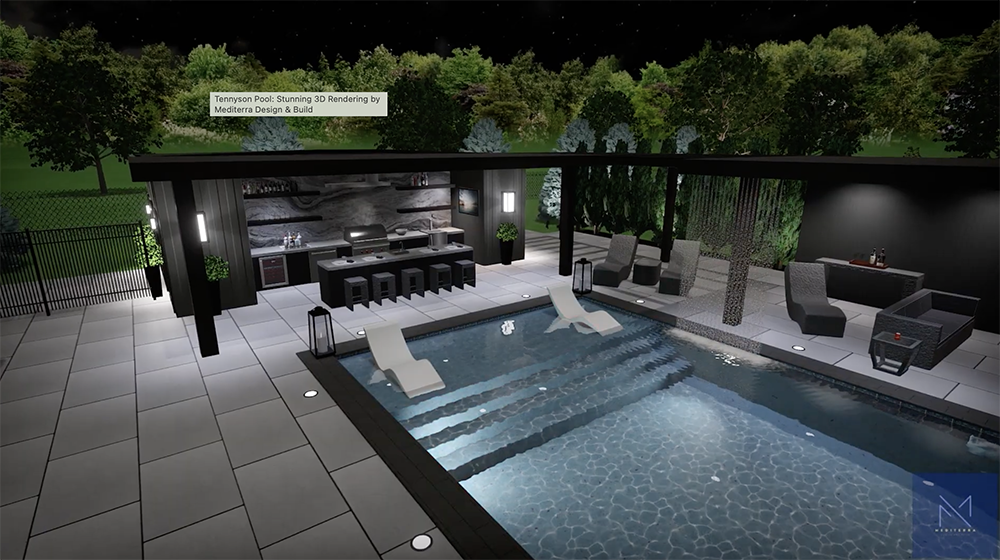
Lighting plays a key role in shaping the atmosphere of pavilion spaces, particularly during evening use.
Effective lighting design may include:
• overhead fixtures integrated into the structure
• accent lighting highlighting architectural elements
• task lighting for dining areas
• ambient lighting surrounding lounge seating
When planned thoughtfully, lighting transforms the pavilion into a warm and inviting focal point within the landscape.
Integrating the Pavilion With the Landscape
Pavilions rarely exist as standalone structures. Instead, they function best when integrated with surrounding elements such as patios, planting and water features.
Examples of thoughtful integration include:
• pavilions adjacent to outdoor kitchens for sheltered dining
• poolside pavilions providing shaded lounge areas
• garden pavilions creating quiet retreats
These relationships help organize outdoor environments into cohesive compositions that support both everyday use and entertaining.
Conclusion
Pavilion structures introduce both architectural character and practical comfort into outdoor living environments.
By providing shelter, defining gathering spaces and reinforcing the architectural language of the landscape, pavilions become one of the most valuable elements of backyard design.
Across the Greater Toronto Area, homeowners are increasingly incorporating pavilion structures into environments that combine pools, kitchens and garden spaces.
At Mediterra Design & Build, pavilion structures are designed as integral components of outdoor living environments where architecture, landscape and lifestyle are carefully considered.